✓ Focused on capturing fleeting moments, light, and atmosphere.
✓ Characterized by visible brushstrokes, open composition, and emphasis on light.
✓ Rejected traditional academic painting styles and historical subjects.
How It Works
1
Observe the World
Impressionists painted directly from life, often outdoors (en plein air), capturing scenes as they appeared in that specific moment. They emphasized direct observation over studio idealism.
2
Capture Light and Color
Artists focused on how light affected color and form, using broken brushstrokes and pure, unmixed colors to convey vibrancy. They studied the changing effects of light throughout the day and seasons.
3
Embrace the Fleeting Moment
The goal was to capture an 'impression' – a momentary, subjective perception of reality. This meant quick, spontaneous brushwork rather than meticulous detail, reflecting the transient nature of modern life.
4
Break from Tradition
Impressionists challenged the established Salon system, preferring contemporary subjects like landscapes, cityscapes, and everyday life. Their loose style and unconventional compositions were considered radical at the time.
Understanding the Essence of Impressionism Art
Photo: Colin Fearing / Pexels
To truly grasp what is Impressionism art, one must journey back to 19th-century Paris, a city in flux, undergoing rapid modernization and social change. It was against this vibrant backdrop that a group of radical young artists began to challenge the rigid conventions of the French art establishment. Tired of historical and mythological themes, and the polished, idealized finish demanded by the prestigious Salon, these artists sought to capture the world as they truly saw it – not as it was 'supposed' to be. The term "Impressionism" itself was initially a derogatory label, coined by art critic Louis Leroy in 1874 after viewing Claude Monet's painting, 'Impression, Sunrise.' He intended it as an insult, implying the works were unfinished sketches rather than serious art. However, the artists embraced the term, recognizing its aptness in describing their aim: to convey a subjective 'impression' of a scene rather than a precise, objective rendering. This movement marked a pivotal shift in art history, moving away from academic realism towards a more personal and perceptual approach.
At its core, Impressionism is characterized by several key elements. Firstly, there's a strong emphasis on light and its changing qualities. Impressionists were fascinated by how light transformed colors and forms, and they often painted the same subject multiple times under different lighting conditions to explore these nuances – think of Monet's series of Rouen Cathedral or haystacks. Secondly, their technique involved visible, loose brushstrokes, often applied in dabs or dashes of pure color. This wasn't about blending colors smoothly on the canvas but allowing the viewer's eye to mix them from a distance, creating a vibrant, shimmering effect. Thirdly, open composition became a hallmark. Instead of meticulously framing a scene, Impressionists often cropped their subjects abruptly, mimicking the candidness of a photograph and giving the viewer a sense of being part of a larger, ongoing moment. They embraced everyday subjects – landscapes, cityscapes, portraits of ordinary people, and scenes of contemporary leisure – rather than grand narratives. This focus on the mundane elevated the ordinary to the extraordinary, celebrating the beauty in the transient moments of modern life. The Impressionists' revolutionary spirit paved the way for subsequent art movements, fundamentally altering the trajectory of Western art and inviting viewers to see the world with fresh eyes.
The Pioneering Artists and Their Revolutionary Techniques
Photo: KoolShooters / Pexels
The birth of Impressionism was not a solitary event but a collective rebellion spearheaded by a group of visionary artists who shared similar ideals and frustrations with the art world of their time. Claude Monet is arguably the most iconic figure associated with what is Impressionism art, with his relentless pursuit of capturing light and atmosphere evident in his vast body of work. His series paintings, exploring themes like haystacks, poplars, and the Rouen Cathedral, were groundbreaking in their dedication to documenting the ephemeral effects of light and color throughout different times of day and seasons. Monet famously stated, "The motif is insignificant; what I want to reproduce is what exists between the motif and me." This encapsulates the Impressionist focus on subjective perception over objective reality.
Another pivotal artist was Pierre-Auguste Renoir, whose work often depicted lively social gatherings, portraits, and scenes of domestic life, all rendered with a soft, feathery touch and a celebration of color and light. His 'Luncheon of the Boating Party' is a classic example of his ability to capture the joyful essence of a moment. Edgar Degas, while often considered an Impressionist, had a unique approach, focusing heavily on dancers and racehorses, employing unusual angles and compositions influenced by photography and Japanese prints. His works, though often executed in the studio, shared the Impressionist interest in capturing movement and candid moments. Camille Pissarro, often called the "dean of the Impressionist painters," was instrumental in organizing the group's independent exhibitions and experimented extensively with various techniques, including pointillism, before returning to a more classic Impressionist style. His landscapes and cityscapes reveal a deep sensitivity to the nuances of light and atmosphere.
Édouard Manet, while never formally exhibiting with the Impressionists, was a crucial precursor and mentor. His bold use of flat color, stark contrasts, and modern subjects like 'Olympia' and 'Déjeuner sur l'herbe' scandalized the Salon and paved the way for the younger generation. Berthe Morisot and Mary Cassatt were two prominent female Impressionists who brought a unique perspective to the movement, often depicting intimate domestic scenes and portraits of women and children, offering a glimpse into the private lives of women in 19th-century society. Their contributions were vital in expanding the thematic scope of Impressionism. These artists, through their shared commitment to capturing the fleeting moment, the play of light, and the vibrancy of modern life, collectively redefined the very purpose and practice of painting, leaving an indelible mark on art history and inspiring countless generations of artists.
The Lasting Impact and Evolution Beyond Impressionism
Photo: hello aesthe / Pexels
The impact of what is Impressionism art extends far beyond its initial period, fundamentally altering the course of Western art and influencing subsequent movements in profound ways. Its radical departure from academic tradition opened the floodgates for experimentation and subjective expression, liberating artists from rigid rules and encouraging them to develop their unique visions. Before Impressionism, art was largely seen as a window into an idealized or historical past; after Impressionism, it became a mirror reflecting the artist's personal experience of the present. This shift towards modernity, immediacy, and individual perception was revolutionary. The emphasis on visible brushstrokes and the materiality of paint itself also laid groundwork for future abstract movements, where the act of painting became as important as the subject matter.
The immediate successor to Impressionism was Post-Impressionism, a term encompassing a diverse group of artists who, while influenced by Impressionism's use of color and light, sought to imbue their work with greater emotional depth, symbolic meaning, or structural solidity. Artists like Vincent van Gogh, Paul Cézanne, and Paul Gauguin built upon Impressionist foundations but pushed artistic boundaries in new directions. Van Gogh, for instance, used vibrant, expressive brushstrokes and heightened colors to convey intense emotion, moving beyond the objective capture of light to a more subjective, psychological landscape. Cézanne, on the other hand, sought to bring order and structure back to painting, analyzing nature in terms of geometric forms and influencing the development of Cubism. Gauguin explored symbolic and exotic themes, using flat areas of color and strong outlines, paving the way for Symbolism and Fauvism. These artists, while distinct in their approaches, all owed a debt to the Impressionists for breaking the mold and allowing for such diverse personal expression. The legacy of Impressionism can be seen in its continuous influence on modern art, from Fauvism's bold colors to the fractured perspectives of Cubism, and even into contemporary art forms that prioritize personal experience and the artist's unique perspective. Its spirit of innovation and its celebration of the transient beauty of the everyday continue to resonate with artists and viewers alike, ensuring its enduring relevance in the global art canon.
Identifying Impressionist Art: Key Characteristics and Common Misconceptions
Photo: Steve A Johnson / Pexels
Recognizing what is Impressionism art involves understanding its core characteristics, but also dispelling some common misconceptions. When you look at an Impressionist painting, you'll typically notice several defining features. Firstly, the brushwork is often loose, visible, and unblended, giving the surface a textured, almost unfinished quality. This was intentional, designed to convey the fleeting nature of the moment and the artist's immediate perception. Secondly, the use of color is vibrant and often applied in dabs or strokes of pure, unmixed pigment. Impressionists rarely used black, preferring to create shadows by mixing complementary colors or using dark blues and purples, which resulted in more luminous and naturalistic effects. Thirdly, the focus is heavily on light – how it falls on surfaces, how it changes colors, and how it creates atmosphere. Many Impressionist paintings seem to shimmer with light, capturing a specific time of day or weather condition. Finally, subjects are typically contemporary scenes: landscapes, cityscapes, portraits of ordinary people, and depictions of modern life and leisure, often captured from unusual angles or with cropped compositions.
A common misconception is that all Impressionist art is 'pretty' or 'pleasant.' While many works are indeed beautiful and evoke a sense of calm or joy, the movement was born out of a radical rejection of academic norms and was often met with harsh criticism for its perceived sloppiness and lack of finish. Another misunderstanding is that Impressionists were purely objective in their depiction of reality. In fact, their 'impressions' were deeply subjective – they painted not just what they saw, but how they felt about what they saw, incorporating their personal perceptions. Furthermore, while 'en plein air' (painting outdoors) was a significant practice, not all Impressionist works were completed outside; many were refined or completed in the studio. Some might also confuse Impressionism with Pointillism (like Seurat's work), which uses distinct dots of color to create an image, or with Post-Impressionism, which built upon Impressionist ideas but moved towards more symbolic or structured forms. Understanding these nuances helps in a deeper appreciation of the Impressionist movement and its profound contribution to art history.
Comparison
Feature
Impressionism
Academic Art (Pre-Impressionism)
Post-Impressionism
Brushwork
Visible, loose, broken
Smooth, blended, invisible
Varied (expressive, structured, symbolic)
Focus
Fleeting light, atmosphere, immediate perception
Historical narratives, mythological scenes, idealized forms
Emotional depth, structure, symbolism, personal vision
Religious, historical, mythological, portraits of nobility
Varied (landscapes, portraits, still life), often with deeper meaning
Color Use
Vibrant, pure, unmixed; shadows in color
Subdued, mixed; shadows in black/brown
Heightened, symbolic, or structurally applied
What Readers Say
★★★★★
"This article beautifully explains what is Impressionism art. I always loved the paintings, but now I understand the revolutionary techniques and the context behind them. Truly insightful!"
Sarah J. · New York, NY
★★★★★
"As an art enthusiast, I found this deep dive into Impressionism incredibly helpful. The sections on key artists and common misconceptions were particularly enlightening, clarifying many points I had wondered about."
David M. · Los Angeles, CA
★★★★★
"I used to think Impressionism was just 'pretty pictures,' but this article opened my eyes to the profound shift it represented in art. My next museum visit will be much richer thanks to this explanation of what is Impressionism art."
Emily R. · Chicago, IL
★★★★★
"A very comprehensive overview of Impressionism. While I wish there were more visual examples embedded, the detailed descriptions of techniques and artist contributions were excellent. It truly captures the essence of what is Impressionism art."
Mark T. · Seattle, WA
★★★★★
"Fantastic resource for anyone wanting to learn about Impressionism. It's written clearly and engagingly, making complex art history accessible. I now feel much more confident discussing what is Impressionism art with friends."
Jessica L. · Boston, MA
Frequently Asked Questions
What is the most defining characteristic of Impressionism art?
The most defining characteristic of Impressionism is its focus on capturing the fleeting effects of light and atmosphere. Artists used visible, loose brushstrokes and vibrant, unmixed colors to convey a subjective 'impression' of a scene, rather than a detailed, objective rendering. This technique aimed to capture the immediate, transient moment.
Why was Impressionism considered so revolutionary at the time?
Impressionism was revolutionary because it directly challenged the rigid rules and conventions of traditional academic art. It rejected historical and mythological subjects in favor of modern, everyday life, and its loose brushwork, open compositions, and focus on light and color were seen as radical and 'unfinished' by the art establishment, paving the way for artistic freedom.
How did Impressionist artists paint outdoors (en plein air)?
Impressionist artists painted 'en plein air' (outdoors) to directly observe and capture the changing effects of natural light and atmosphere. They would set up their easels outside, often in landscapes or cityscapes, and work quickly to record their immediate perceptions before the light changed. This practice was aided by the invention of portable easels and pre-mixed paints in tubes.
Is Impressionism expensive to collect today?
Yes, original Impressionist artworks by renowned masters like Monet, Renoir, or Degas are among the most sought-after and expensive pieces in the art market. They frequently fetch millions, sometimes tens or hundreds of millions, of dollars at auction, reflecting their historical significance, rarity, and enduring aesthetic appeal to collectors worldwide.
What is the difference between Impressionism and Post-Impressionism?
Impressionism focused on capturing fleeting moments, light, and atmosphere with visible brushstrokes. Post-Impressionism, which followed, built upon Impressionist use of color and light but sought to add more emotional expression, structural solidity, or symbolic meaning to their work. Artists like Van Gogh (emotion), Cézanne (structure), and Gauguin (symbolism) are key Post-Impressionists.
Who should learn about what is Impressionism art?
Anyone interested in art history, painting techniques, or the evolution of modern art should learn about Impressionism. It's essential for students, art enthusiasts, museum-goers, and anyone who appreciates beauty and innovation in creative expression, as it fundamentally changed how we perceive and create art.
Are there any risks in misinterpreting Impressionist art?
A common risk is viewing Impressionist art as merely 'pretty' or 'easy to understand' without appreciating its revolutionary context and technical innovation. Misinterpreting the visible brushstrokes as 'unfinished' rather than intentional can also diminish appreciation for the artists' skill and purpose in capturing a specific 'impression' rather than a photographic likeness.
What is the future trend for the study of Impressionism?
Future trends in the study of Impressionism will likely involve increased use of digital analysis to understand pigments and brushwork, interdisciplinary approaches linking art to social history and scientific advancements of the era, and continued exploration of lesser-known artists and global influences. There's also a growing focus on the roles of female artists and the business aspects of the art market during this period.
Now that you have a comprehensive understanding of what is Impressionism art, dive deeper into its masterpieces and revolutionary spirit. Explore local museums or online galleries to witness the enduring beauty and transformative power of this pivotal art movement for yourself.

 Photo: Colin Fearing / Pexels
 Photo: KoolShooters / Pexels
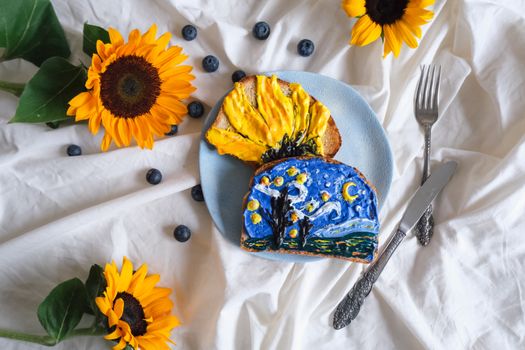 Photo: hello aesthe / Pexels
 Photo: Steve A Johnson / Pexels