What is Contemporary Art Definition? A Comprehensive Guide
contemporary art definition

What is Contemporary Art Definition? A Comprehensive Guide

Unlock the mysteries of art made today, its diverse forms, and profound cultural relevance.

Explore Contemporary Art

Key Takeaways

  • ✓ Contemporary art typically refers to art produced from the 1960s or 1970s to the present day.
  • ✓ It is characterized by its diversity, often challenging traditional notions of art and beauty.
  • ✓ Themes frequently explored include identity, globalization, technology, and social justice.
  • ✓ Contemporary art utilizes a vast array of mediums, from painting and sculpture to performance, video, and digital art.

How It Works

1
Historical Context

Understand the historical movements and societal shifts that led to the emergence of contemporary art. It builds upon, reacts to, and often departs from earlier modern art movements.

2
Key Characteristics

Identify common characteristics such as conceptual focus, multidisciplinary approaches, and engagement with current events. Contemporary art often prioritizes ideas over purely aesthetic concerns.

3
Diverse Mediums

Recognize the expansive range of materials and forms artists employ today. This includes traditional mediums alongside new media like digital installations, virtual reality, and bio-art.

4
Viewer Engagement

Appreciate how contemporary art often seeks active participation or intellectual engagement from its audience. It frequently prompts questions, discussions, and personal interpretations rather than just passive observation.

Defining Contemporary Art: Beyond the Timeline

A minimalist black and white indoor art display with striking shadows. Photo: dilara irem / Pexels
To truly grasp 'what is contemporary art definition,' one must move beyond a simple chronological understanding. While often cited as art from the 1960s or 1970s to the present, this timeframe is more a convention than a rigid boundary. The essence of contemporary art lies not just in *when* it was made, but *how* and *why*. It's a dynamic, ever-evolving field that constantly questions, reflects, and redefines itself in response to the rapidly changing world. Unlike earlier art periods with distinct styles and manifestos, contemporary art is characterized by its lack of a singular, unifying aesthetic. Instead, it thrives on pluralism, embracing a multitude of styles, techniques, and philosophies. This makes it both incredibly rich and, at times, challenging to categorize. Artists working today are keenly aware of the vast history of art that precedes them, often engaging in dialogue with past movements, subverting their conventions, or recontextualizing historical themes for a modern audience. They might appropriate images, materials, or concepts from art history, popular culture, or even scientific research, blending them in novel ways. The conceptual underpinning is frequently as important, if not more so, than the visual outcome. For example, a pile of bricks might be considered art not because of its inherent beauty, but because of the artist's intention, the context of its display, and the questions it provokes about labor, value, or architecture. This emphasis on concept often requires the viewer to engage intellectually, to read accompanying texts, or to bring their own experiences and knowledge to bear on the artwork. It's an active rather than passive viewing experience. Furthermore, contemporary art is deeply intertwined with global events and societal issues. Artists often act as commentators, critics, or provocateurs, using their work to address pressing concerns such as climate change, identity politics, human rights, technological advancement, and the complexities of globalization. Their work can be a mirror reflecting society's anxieties and triumphs, or a catalyst for critical thought and social change. The geographical scope of contemporary art is also truly global, with artists from every continent contributing to the discourse. This has led to a rich cross-cultural exchange, influencing themes, materials, and artistic approaches. Understanding contemporary art means appreciating this vast, interconnected web of ideas and expressions, recognizing that its definition is less about fixed rules and more about ongoing exploration and interrogation. It’s an ongoing conversation, not a static conclusion. Exploring modern art movements helps contextualize this evolution, revealing the continuous thread of artistic innovation.

Characteristics and Key Themes in Contemporary Art
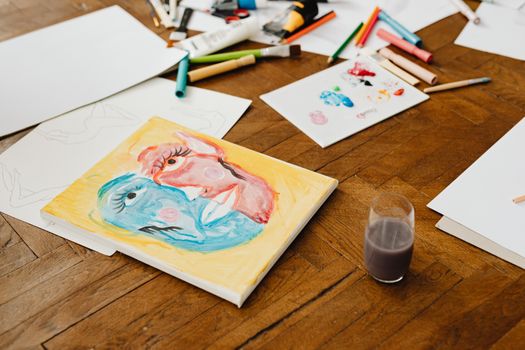
Art supplies scattered on a wooden floor, featuring vibrant paintings and tools for creative projects. Photo: https://kaboompics.com/ / Pexels
The characteristics of contemporary art are as varied as the artists who create it, yet certain common threads help us understand its expansive nature. One of the most salient features is its multidisciplinary approach. Artists are no longer confined to traditional categories like painting or sculpture. They freely experiment with performance art, video art, installation art, digital art, sound art, bio-art, and even social practice, where the artwork is an interaction or intervention within a community. This blurring of boundaries allows for greater expressive freedom and the ability to tackle complex ideas from multiple angles. Another defining characteristic is the emphasis on context and experience. Contemporary artworks are often site-specific, meaning they are designed for a particular location, and their meaning is deeply tied to that environment. Installation art, for instance, transforms an entire space, enveloping the viewer in an immersive experience rather than presenting a single object for contemplation. Performance art, by its very nature, is ephemeral and relies on the live interaction between artist, audience, and environment, making each viewing unique. The viewer's role is often crucial. Contemporary art frequently invites participation, reflection, or even discomfort. It challenges preconceived notions of beauty, skill, and what constitutes art itself. An artwork might deliberately be unfinished, messy, or even appear mundane, pushing the audience to question their own expectations and definitions. This can be unsettling but also incredibly liberating, opening up new ways of seeing and thinking. Key themes consistently explored in contemporary art include identity – personal, cultural, national, and gender identity – often examining issues of belonging, otherness, and self-expression in a globalized world. Globalization itself is a frequent subject, with artists exploring migration, cultural hybridity, and the interconnectedness of economies and societies. Technology plays a dual role: it's both a tool for artistic creation (digital painting, VR, AI art) and a subject of critique, as artists examine its impact on human relationships, privacy, and the future of society. Environmental concerns, climate change, and humanity's relationship with the natural world are also prevalent themes, often leading to eco-art or works that use natural materials or address ecological destruction. Finally, social and political commentary remains a powerful force, with artists using their platforms to challenge power structures, advocate for justice, and shed light on marginalized voices and experiences. This thematic depth ensures that contemporary art remains relevant and engaging, constantly sparking dialogue and reflection on the world we inhabit. It's a testament to the power of art to both mirror and shape our understanding of reality.

The Evolution of Contemporary Art: From Post-Modernism to Today
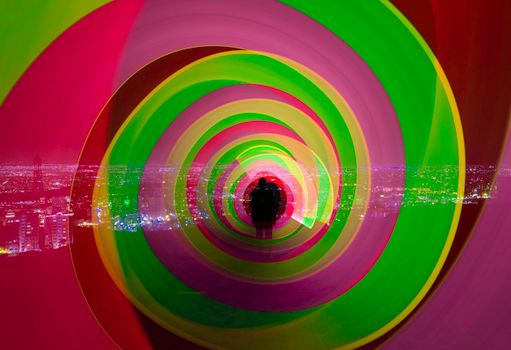
Colorful light painting creating a tunnel effect with a cityscape silhouette at night. Photo: ali atyabi / Pexels
Understanding 'what is contemporary art definition' requires tracing its roots back to the influential shifts brought about by post-modernism. While often used interchangeably, 'contemporary' and 'post-modern' are distinct. Post-modernism, emerging in the mid-to-late 20th century, was a critical reaction against the grand narratives and perceived universal truths of modernism. It questioned authority, embraced irony, deconstructed established forms, and celebrated fragmentation and plurality. Contemporary art inherits many of these post-modern sensibilities but pushes them further, integrating new technologies and responding to ever-accelerating global changes. Post-modern art often featured appropriation, pastiche, and a playful subversion of historical styles. Artists like Cindy Sherman and Jeff Koons exemplify this era, engaging with consumer culture, media imagery, and the constructed nature of identity. Contemporary art continues this critical engagement but with an expanded toolbox and a more acute awareness of global interconnectedness. The advent of the internet and digital technology has profoundly impacted contemporary art, opening up entirely new mediums and possibilities. Net art, digital installations, virtual reality experiences, and generative art are now common, challenging traditional notions of authorship, permanence, and exhibition space. Artists can create works that are interactive, ephemeral, or even exist solely in the digital realm, accessible to a global audience. This technological integration also fuels explorations into themes of surveillance, data privacy, artificial intelligence, and the nature of reality in a hyper-connected world. Moreover, the global shift in art world attention from predominantly Western centers to include vibrant scenes in Asia, Africa, and Latin America has diversified contemporary art immeasurably. This globalization has led to a richer tapestry of perspectives, challenging Eurocentric narratives and introducing new aesthetic traditions, philosophical frameworks, and social concerns into the mainstream discourse. Artists from diverse backgrounds bring unique cultural insights, often addressing post-colonial issues, indigenous rights, and the complexities of hybrid identities. The market for contemporary art has also evolved significantly, becoming a global phenomenon with major art fairs, biennials, and auction houses playing a crucial role. This commercial aspect, while sometimes controversial, has provided unprecedented opportunities for artists to gain recognition and financial support, further fueling the diversity and experimental nature of the field. The ongoing dialogue between art, technology, society, and global cultures ensures that contemporary art remains a vital and ever-changing force, constantly pushing boundaries and reflecting the complex realities of our present moment. It's a field that demands an open mind and a willingness to engage with the unfamiliar, offering profound insights into the human condition in the 21st century. Understanding art history provides a crucial backdrop for appreciating these transformations.

Navigating Contemporary Art: Tips for the Engaged Viewer
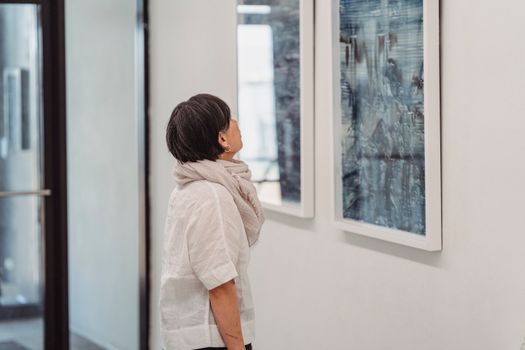
A woman in a gallery intently observes abstract paintings, highlighting her engagement with modern art. Photo: Greta Hoffman / Pexels
Approaching contemporary art can sometimes feel daunting, but with a few strategies, it becomes an incredibly rewarding experience. Here are some tips to help you engage more deeply and avoid common pitfalls: * **Embrace the Unfamiliar:** Don't expect contemporary art to always conform to traditional notions of beauty or skill. Its purpose is often to challenge, provoke, or make you think, rather than simply to please the eye. Be open to new forms, materials, and concepts. * **Read the Labels (and Beyond):** Exhibition texts, wall labels, and artist statements are invaluable. They often provide crucial context, the artist's intentions, and the conceptual framework behind the work. If available, delve into exhibition catalogs or online resources for deeper understanding. * **Ask Questions, Don't Assume:** Instead of asking, 'Is this art?' or 'What does it mean?', try asking, 'What is the artist trying to communicate?' 'What materials are used and why?' 'How does this make me feel or think?' The answers aren't always definitive, and the process of questioning is part of the experience. * **Look for Connections:** Contemporary art often references history, politics, science, or popular culture. Try to identify these connections. What societal issues might the artist be addressing? What historical art movements might they be responding to? * **Consider the Context:** The space an artwork is displayed in, the current events when it was created, and the artist's background can all influence its meaning. An artwork's message can shift depending on its context. * **Engage with Performance and Installation:** If encountering performance art or a large-scale installation, immerse yourself. Allow the experience to unfold. These forms are often about creating an environment or a specific temporal event, not just a static object. * **Don't Be Afraid to Dislike It (or Love It):** Art is subjective. It's okay not to connect with every piece, just as it's okay to be deeply moved by others. Your personal reaction is valid. The goal isn't always universal appeal, but often to spark individual thought and emotion. * **Visit Multiple Venues:** Contemporary art is shown in a variety of spaces, from major museums and commercial galleries to artist-run initiatives and public spaces. Each venue offers a different perspective and type of encounter. Experiencing a wide range of works will broaden your understanding.

Comparison

FeatureContemporary ArtModern ArtTraditional Art
Time Period1960s/70s - Present1860s - 1960sPre-1860s (Renaissance, Baroque, etc.)
Key FocusConcept, Experience, DialogueInnovation, Abstraction, FormalismRepresentation, Skill, Narrative
MediumsMultidisciplinary (video, installation, digital, performance, bio-art)Painting, Sculpture, PhotographyPainting, Sculpture, Drawing
Viewer RoleActive participation, InterpretationContemplation, Aesthetic appreciationAppreciation of skill, Storytelling
ThemesIdentity, Globalization, Technology, Social JusticeModern life, Emotion, SubconsciousReligion, Mythology, History, Portraits
AestheticDiverse, often challenging, pluralisticExperimentation, break from traditionEstablished conventions, beauty standards

What Readers Say

"This article finally clarified 'what is contemporary art definition' for me. I always felt intimidated, but the breakdown of characteristics and themes made it so accessible and engaging. Truly helpful!"

Sarah J. · Brooklyn, NY

"As an aspiring artist, understanding the evolution from post-modernism to today's contemporary art is crucial. This guide provided the historical context and thematic insights I needed to deepen my practice."

Mark D. · Chicago, IL

"I used to walk through contemporary galleries feeling lost. After reading this, I now approach artworks with curiosity, looking for the conceptual underpinnings, and it has completely transformed my viewing experience."

Eleanor R. · Los Angeles, CA

"While comprehensive, some of the concepts still require a bit of re-reading for full absorption. However, the 'Tips for the Engaged Viewer' section is gold – practical advice that makes a real difference."

Thomas K. · Austin, TX

"My art history class touched on this, but this article expanded on 'what is contemporary art definition' in a way that connected it to current global issues. It's not just art; it's a reflection of our world."

Maria S. · Miami, FL

Frequently Asked Questions

What is the primary difference between contemporary art and modern art?

The primary difference lies in their timeframes and underlying philosophies. Modern art (roughly 1860s-1960s) focused on breaking from academic tradition, emphasizing innovation, abstraction, and formal experimentation. Contemporary art (1960s/70s-present) builds upon this but is characterized by its multidisciplinary nature, conceptual focus, engagement with current societal issues, and a questioning of what art can be.

Why does contemporary art often seem so confusing or 'not like art'?

Contemporary art often challenges traditional notions of beauty, skill, and representation, prioritizing concept, experience, and dialogue over purely aesthetic concerns. It may use unconventional materials or forms, pushing viewers to think critically rather than just admire. This can be unfamiliar, but understanding the artist's intent and context can unlock its meaning and value.

How can I start appreciating contemporary art if I'm new to it?

Start by visiting local contemporary art museums or galleries and read the accompanying wall texts and artist statements carefully. Don't be afraid to ask questions, even if they seem basic. Focus on what the artwork makes you feel or think, rather than judging it immediately. Engage with the context and the themes being explored, and remember that personal interpretation is often part of the experience.

Is contemporary art more valuable than older art forms?

The value of art, whether aesthetic, cultural, or monetary, is highly subjective and complex. Contemporary art can command high prices at auction, but its 'value' is not inherently greater or lesser than older art forms. Its significance often lies in its relevance to current societal issues, its capacity to provoke thought, and its contribution to the ongoing evolution of artistic expression, rather than just its age.

How does contemporary art compare to post-modern art?

Contemporary art is often seen as an extension or evolution of post-modernism. Post-modern art (mid-20th century) critically questioned modernism's grand narratives, embracing irony, appropriation, and deconstruction. Contemporary art continues these critical engagements but integrates new technologies, a more global perspective, and a direct response to 21st-century issues like globalization, digital culture, and identity politics, making it broader and more current.

Who should engage with contemporary art?

Anyone interested in understanding the world we live in, exploring diverse perspectives, or challenging their own perceptions should engage with contemporary art. It's for curious minds, critical thinkers, and those open to new experiences, regardless of their prior art knowledge. It offers a unique lens through which to view societal changes, human emotions, and the future.

Are there risks in investing in contemporary art?

As with any art market, investing in contemporary art carries risks. Prices can be volatile, influenced by trends, critical reception, and the artist's career trajectory. While some pieces appreciate significantly, others may not. It's crucial to research artists, consult with experts, and understand the market dynamics, rather than viewing it purely as a financial investment. Passion for the art itself should be a primary driver.

What future trends are anticipated in contemporary art?

Future trends in contemporary art are likely to continue exploring the intersection of art and technology, with AI-generated art, virtual reality, and augmented reality becoming more prevalent. Environmental and social justice themes will remain central, possibly leading to more collaborative, community-focused, and activist art forms. We can also expect continued globalization and diversification of voices, further challenging traditional art world structures and expanding the definition of art itself.

Unlock a deeper appreciation for the art of our time. By understanding 'what is contemporary art definition,' you gain a powerful lens through which to view and interpret the complex world around you. Start your journey into contemporary art today and discover the profound insights it offers.

Topics: contemporary art definitionmodern art explainedpost-modern art characteristicsart movements todayunderstanding contemporary art
Leo List

DK Escorts LU Escorts AT Escorts SE Escorts FI Escorts CH Escorts DE Escorts HR Escorts IE Escorts GR Escorts CZ Escorts NO Escorts BE Escorts FR Escorts SI Escorts IL Escorts NL Escorts PL Escorts HU Escorts ES Escorts IT Escorts PT Escorts SK Escorts RO Escorts ZA Escorts UY Escorts US Escorts UK Escorts NZ Escorts AU Escorts
Brampton weed
Adultwork EstrelaBet Vai de Bet R7 Bet Betão Galera Bet Rainbet Bet9ja Shop SportyBet BetKing Sisal Loto Foot Hollywoodbets YesPlay Odibets RushBet Jugabet BetWarrior BetCity MSport betPawa Fortebet