Unlocking the Meaning of Surrealism in Art
meaning of surrealism in art

Unlocking the Meaning of Surrealism in Art

Explore the subconscious depths and dreamlike landscapes that define this revolutionary artistic movement.

Discover Surrealism Now

Key Takeaways

  • ✓ Surrealism emerged in the 1920s from Dadaism, emphasizing the liberation of the subconscious mind.
  • ✓ André Breton's 'Surrealist Manifesto' (1924) formally launched the movement, defining it as 'pure psychic automatism'.
  • ✓ Key techniques included automatism, dream analysis, and juxtaposition of unrelated objects.
  • ✓ Influential artists like Salvador Dalí, René Magritte, and Frida Kahlo are synonymous with surrealism.

How It Works

1
Understand the Origins

Surrealism wasn't born in a vacuum. It evolved from the anti-establishment sentiment of Dadaism, seeking to go beyond its nihilistic approach by constructing new realities.

2
Embrace the Subconscious

At its core, surrealism champions the Freudian concept of the subconscious. Artists aimed to bypass rational thought to tap into dreams, desires, and hidden psychological states, believing these held a truer reality.

3
Explore Artistic Techniques

Surrealists employed various methods to achieve their goals, such as automatism (drawing or writing without conscious control), frottage (rubbing a textured surface), and collage. These techniques were designed to circumvent rational censorship and allow the subconscious to manifest freely.

4
Interpret Juxtaposition

A hallmark of surrealist art is the unexpected combination of disparate elements in a single image. This juxtaposition creates a sense of unease, wonder, and often humor, challenging viewers to find meaning in the illogical.

The Genesis and Philosophical Underpinnings of Surrealist Art
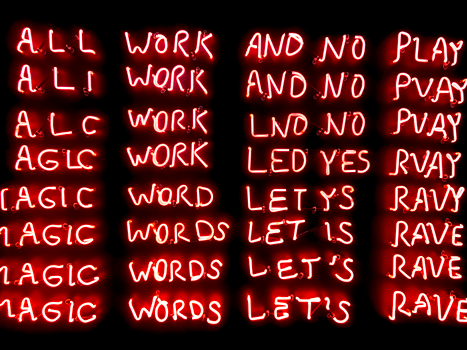
Colorful neon sign displaying creative phrases and words against a black background. Photo: Antonio Florentini / Pexels
To truly grasp the meaning of surrealism in art, one must first journey back to its origins in post-World War I Europe. The devastation of the war had shattered traditional beliefs and values, leading many intellectuals and artists to question the very foundations of Western civilization. From this fertile ground of disillusionment emerged Dadaism, an avant-garde movement that rejected logic and reason, embracing nonsense and irrationality as a protest against the societal norms that had led to such destruction. Surrealism, while sharing Dada's anti-establishment spirit, sought to move beyond mere negation. It aimed not just to destroy but to reconstruct, to find a 'super-reality' – a surreality – by merging the conscious and unconscious realms. The official birth of Surrealism is often attributed to André Breton, a French poet and former medical student, who, alongside Louis Aragon and Philippe Soupault, began experimenting with automatic writing. This technique, directly inspired by Freudian psychoanalysis, involved writing without conscious thought or control, allowing the subconscious mind to express itself freely. Breton, deeply influenced by Sigmund Freud's theories on dreams and the unconscious, believed that the rational mind suppressed vast territories of human experience. He argued that art should serve as a conduit to these hidden depths, revealing a richer, more profound truth than that accessible through logic alone. In 1924, Breton published his seminal 'Manifesto of Surrealism,' which formally articulated the movement's principles. He defined Surrealism as 'pure psychic automatism, by which one proposes to express, verbally, by means of the written word, or in any other manner, the actual functioning of thought. Dictated by thought, in the absence of any control exercised by reason, outside of all aesthetic and moral preoccupation.' This manifesto was a call to arms for artists to liberate themselves from conventional constraints, to explore the irrational, the dreamlike, and the fantastical. The philosophical underpinnings of surrealism were thus deeply rooted in Freudian psychology, revolutionary politics (many early surrealists were associated with communism), and a profound desire to challenge bourgeois conventions and societal repression. It wasn't merely an artistic style; it was a way of life, a method for personal and collective liberation. This foundational understanding is crucial for anyone seeking to understand the essence of artistic movements that challenge perception. The movement's embrace of the irrational was a direct counterpoint to the Enlightenment's emphasis on reason, suggesting that true understanding lay beyond the purely logical.

Key Characteristics and Artistic Techniques Employed by Surrealists
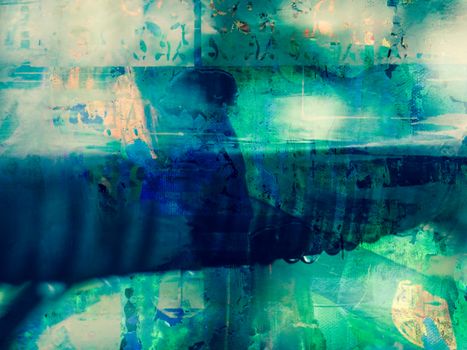
Abstract art with vibrant blue and green textures and layered patterns Photo: Steve A Johnson / Pexels
The meaning of surrealism in art is not solely found in its philosophical roots but also profoundly expressed through its distinctive visual language and innovative techniques. Surrealist artists developed a repertoire of methods designed to unlock the subconscious and translate its visions onto canvas or into sculpture. One of the most prominent characteristics is the juxtaposition of unexpected and often contradictory elements. Think of Salvador Dalí's melting clocks in 'The Persistence of Memory' or René Magritte's 'The Treachery of Images,' where a meticulously rendered pipe is famously accompanied by the text 'Ceci n'est pas une pipe' (This is not a pipe). These illogical pairings create a disorienting, dreamlike quality, forcing the viewer to question reality and seek meaning beyond the obvious. Automatism, as mentioned earlier, was not limited to writing. Artists like Joan Miró and Max Ernst experimented with 'automatic drawing' or 'automatic painting,' allowing their hands to move freely across the surface without conscious direction, hoping to bypass rational control and tap directly into their unconscious. This could involve random doodling, scribbling, or even more complex methods like frottage (rubbing a crayon or pencil over a textured surface to create an imprint) and grattage (scraping paint off a canvas to reveal underlying textures or colors). These techniques were less about creating a finished, polished work and more about the process of discovery, allowing chance and the unconscious to guide the creative act. Another defining characteristic is the exploration of dreams and the uncanny. Many surrealist works directly depict dream imagery, often with vivid detail and startling realism, yet presenting scenarios that defy logic in the waking world. The uncanny, a concept explored by Freud, refers to the strange and unsettling feeling evoked by something familiar yet simultaneously alien. Surrealists masterfully exploited this, rendering familiar objects in unfamiliar contexts, or distorting human forms in unsettling ways. The aim was to evoke a psychological response, to tap into primal fears and desires, and to reveal the hidden anxieties and fantasies that lie beneath the surface of everyday life. The meticulous rendering of impossible scenes by artists like Dalí and Magritte, often called 'veristic surrealism,' heightens this effect, making the absurd appear disturbingly real. This deliberate ambiguity and challenge to perception are central to understanding the movement's enduring appeal and its profound impact on subsequent artistic and cultural developments. The commitment to visual paradox serves as a constant invitation for the audience to engage in a deeper, more introspective dialogue with the artwork.

Iconic Figures and the Enduring Legacy of Surrealism in Art
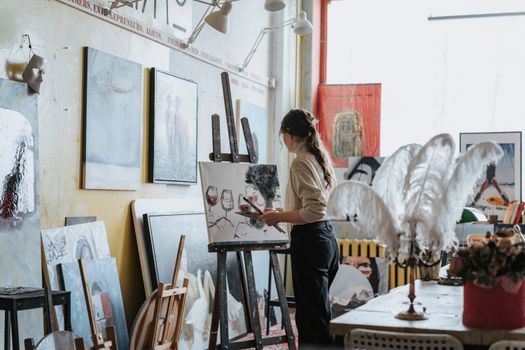
Artist in studio painting with brush on canvas, surrounded by various artworks and decor. Photo: olia danilevich / Pexels
The meaning of surrealism in art is best exemplified through the diverse contributions of its iconic figures, each bringing a unique voice to the collective vision. Salvador Dalí is perhaps the most recognizable surrealist, known for his flamboyant personality and meticulously rendered, hallucinatory landscapes. His 'paranoiac-critical method' involved inducing a delusional state to systematically interpret and materialize subconscious images, resulting in works like 'The Temptation of St. Anthony' and 'Swans Reflecting Elephants.' His work epitomizes the dreamlike, often disturbing, yet undeniably captivating aesthetic of the movement. René Magritte, another titan of Surrealism, approached the movement with a more intellectual and philosophical bent. His art often played with language, symbols, and the nature of representation itself, as seen in 'The Son of Man' (the man with an apple obscuring his face) or 'The Treachery of Images.' Magritte challenged viewers to question what they see and how they interpret reality, demonstrating that perception is often a subjective and deceptive experience. His precise, almost academic style made the illogical seem profoundly real, amplifying the unsettling effect. Joan Miró, while often associated with abstract art, was a foundational surrealist who explored automatism and biomorphic forms. His vibrant, playful, yet complex compositions, such as 'The Harlequin's Carnival,' are filled with fantastical creatures and symbols that emerge from his subconscious, reflecting a child-like wonder mixed with sophisticated artistic execution. Frida Kahlo, though often categorized as a magical realist, was deeply influenced by surrealism and exhibited with the group. Her intensely personal and symbolic self-portraits, which explore pain, identity, and Mexican culture, resonate with surrealist themes of inner world exploration and symbolic representation of psychological states. Her raw honesty and dream-like imagery cemented her place among the greats. The legacy of surrealism extends far beyond the canvas, influencing film, literature, fashion, and advertising. Its emphasis on the irrational, the subconscious, and the liberation of desire has permeated popular culture, shaping how we perceive creativity and imagination. From the films of David Lynch to the music videos of contemporary artists, the surrealist aesthetic continues to captivate and provoke. It taught us that reality is far more complex and fluid than we often assume, and that true artistic expression often lies in the uncharted territories of the mind. The movement's profound impact on modern artistic expression continues to inspire artists to delve into the depths of human experience, ensuring its relevance in the contemporary art world. It remains a powerful reminder that the human imagination is boundless and that art can be a powerful tool for self-discovery and societal critique.

Common Misconceptions and Tips for Interpreting Surrealist Art

Surreal image of fish with magnifying glasses and lab setup, artistic concept. Photo: Valentin Ivantsov / Pexels
Understanding the true meaning of surrealism in art often requires debunking common misconceptions. One prevalent misunderstanding is that surrealist art is simply 'weird' or 'random.' While it certainly embraces the unexpected, it is rarely random. Instead, it is a deliberate exploration of the subconscious, guided by specific theories and techniques aimed at revealing deeper psychological truths. The 'weirdness' is a strategic tool to bypass rational thought and provoke a more visceral, emotional, or intuitive response from the viewer. Another misconception is that surrealism is only about dreams. While dreams are a significant source of inspiration, the movement also delves into fantasies, obsessions, Freudian slips, and the uncanny aspects of waking life, all aimed at expanding the boundaries of reality. **Tips for Interpreting Surrealist Art:** * **Embrace the Illogical:** Don't try to find a purely rational explanation for everything you see. Surrealist art thrives on paradox and contradiction. Allow yourself to be disoriented and intrigued by the impossible. * **Look for Symbolism:** While not always straightforward, many elements in surrealist art are symbolic. Research the artist's personal life, cultural background, and the historical context of the work. For instance, clocks often symbolize time, and certain animals might represent specific psychological states. * **Consider the Title:** Surrealist titles are often an integral part of the artwork, sometimes adding another layer of paradox or revealing a hidden meaning. Magritte, in particular, used titles to challenge assumptions. * **Engage Your Own Subconscious:** Let the art speak to your own feelings, memories, and dreams. What associations does it trigger for you? Surrealism is highly personal, and your interpretation is valid. * **Research the Artist's Intent:** Understanding the specific techniques and philosophical leanings of an artist can provide valuable clues. Was the artist focused on automatism, dream interpretation, or political critique? * **Don't Fear the Uncomfortable:** Surrealism often confronts taboo subjects, anxieties, and hidden desires. Be open to experiencing a range of emotions, including unease or fascination. This engagement is part of the intended experience. By approaching surrealist art with an open mind and a willingness to explore the uncharted territories of human experience, viewers can unlock its profound and often transformative meaning, moving beyond surface-level aesthetics to engage with the deeper psychological and philosophical messages embedded within each piece.

Comparison

FeatureSurrealismCubismImpressionism
Primary FocusSubconscious, dreams, irrationalityGeometric forms, multiple perspectivesLight, color, fleeting moments
Key TechniquesAutomatism, juxtaposition, dream imageryFragmentation, simultaneityBrushstrokes, plein air painting
Relationship to RealityDistorts/reimagines realityDeconstructs/reconstructs realityCaptures sensory reality
Philosophical BasisFreudian psychoanalysis, anti-rationalismScientific inquiry, new ways of seeingEmpirical observation, modernity
Emotional ImpactDisorienting, dreamlike, often unsettlingIntellectual, analytical, challengingSensory, tranquil, vibrant

What Readers Say

"This article beautifully articulates the true meaning of surrealism in art. I always found it fascinating but now have a much deeper appreciation for its philosophical underpinnings and artistic techniques. Truly a masterful explanation!"

Sarah J. · Brooklyn, NY

"As an aspiring artist, understanding the meaning of surrealism in art has been crucial. This guide broke down complex ideas into digestible parts, inspiring me to experiment with new ways of accessing my own subconscious for creative expression. Excellent resource!"

Mark D. · Los Angeles, CA

"I used to think surrealism was just 'weird art,' but after reading this, I now see the profound psychological and philosophical depth behind it. My last visit to a museum was completely transformed; I now spot the deliberate juxtapositions and symbolic elements with new eyes."

Elena R. · Chicago, IL

"While very thorough, I sometimes wished for more visual examples embedded directly within the text to connect the concepts to specific artworks more immediately. However, the depth of insight into the meaning of surrealism in art is undeniable and highly valuable for any art enthusiast."

David L. · Austin, TX

"This content is perfect for my art history class! It clearly explains the evolution from Dadaism and the Freudian influences, which is exactly what I needed. It makes the meaning of surrealism in art so much more approachable."

Chloe K. · Seattle, WA

Frequently Asked Questions

What is the core meaning of surrealism in art?

The core meaning of surrealism in art lies in its attempt to liberate the human imagination by tapping into the subconscious mind, dreams, and irrationality. It seeks to merge the conscious and unconscious realities into a 'super-reality,' challenging conventional logic and revealing deeper psychological truths. It's about exploring the hidden depths of human experience.

Is surrealism just about painting strange things?

No, surrealism is far more than just painting strange things. While it often features bizarre or dreamlike imagery, this is a deliberate artistic strategy to bypass rational thought and provoke a deeper emotional or psychological response. The strangeness serves a purpose: to challenge perception, explore the subconscious, and critique societal norms.

How can I start to understand a surrealist painting?

To understand a surrealist painting, start by letting go of the need for immediate rational explanation. Look for juxtapositions of unrelated objects, recurring symbols, and the overall mood or feeling it evokes. Consider the title, research the artist's background, and allow your own subconscious associations to emerge. It's an invitation to interpret, not just observe.

Does surrealist art hold any real value beyond its aesthetic appeal?

Absolutely. Beyond its aesthetic appeal, surrealist art holds immense value in its profound psychological and philosophical insights. It encourages introspection, challenges societal conventions, and has significantly influenced our understanding of creativity, imagination, and the human mind. Its historical context also makes it a powerful commentary on the anxieties and hopes of the early 20th century.

How does surrealism differ from abstract art?

Surrealism differs from abstract art in its relationship to representation. While abstract art largely abandons recognizable forms to focus on pure form, color, and line, surrealism often uses highly realistic or representational elements. However, these elements are placed in illogical contexts or distorted to create a dreamlike, uncanny effect, still referencing a 'reality' even if a distorted one. Abstract art focuses on the non-objective, while surrealism reimagines the objective.

Who should explore the meaning of surrealism in art?

Anyone interested in understanding the human mind, the power of imagination, and the evolution of art should explore the meaning of surrealism. Artists, writers, psychologists, philosophers, and anyone who appreciates thought-provoking and visually striking art will find immense value in delving into this transformative movement.

Are there any risks in interpreting surrealist art too literally?

Yes, interpreting surrealist art too literally can lead to misunderstanding its core intent. The movement thrives on ambiguity, paradox, and the irrational. Trying to find a singular, logical explanation for every element can miss the point that the art is often about the journey into the subconscious, not a straightforward narrative. Embrace the mystery rather than demanding absolute clarity.

What is the future trend for surrealist influences in contemporary art?

Surrealist influences continue to thrive in contemporary art, often manifesting in digital art, photography, and mixed media. Artists are increasingly exploring themes of dreams, artificial intelligence, alternate realities, and the subconscious in new technological contexts. The core surrealist principle of challenging reality and exploring inner worlds remains highly relevant and continues to evolve with new mediums and societal concerns.

Embark on your own journey into the captivating world of the subconscious. Delve deeper into the meaning of surrealism in art and let its revolutionary spirit inspire your perception of reality and creativity. Explore, question, and discover the 'super-reality' that awaits.

Topics: meaning of surrealism in artsurrealist art movementsurrealism definitionart history surrealismsurrealist artists
Leo List
Brampton weed
Adultwork EstrelaBet Vai de Bet R7 Bet Betão Galera Bet Rainbet Bet9ja Shop SportyBet BetKing Sisal Loto Foot Hollywoodbets YesPlay Odibets RushBet Jugabet BetWarrior BetCity MSport betPawa Fortebet