Your Ultimate Guide: How to Start Painting for Beginners
how to start painting for beginners

Your Ultimate Guide: How to Start Painting for Beginners

Unlock your creative potential and embark on a fulfilling artistic journey with simple, actionable steps.

Start Painting Now

Key Takeaways

  • ✓ You don't need expensive supplies to begin painting.
  • ✓ Acrylics are often recommended for their versatility and ease of use.
  • ✓ Focus on basic shapes, values, and color mixing first.
  • ✓ Practice regularly and embrace imperfections as part of the learning process.

How It Works

1
Gather Your Basic Supplies

Start with affordable, essential materials like acrylic paints, brushes, and paper. This minimizes initial investment and makes the process less intimidating.

2
Understand Color Basics

Learn about primary, secondary, and tertiary colors, and how to mix them. Experiment with a color wheel to see how colors interact and create harmonies.

3
Practice Fundamental Techniques

Experiment with different brushstrokes, layering, and blending. Don't aim for perfection, but rather for understanding how the paint behaves.

4
Start with Simple Subjects

Choose easy subjects like fruits, geometric shapes, or simple landscapes. This helps build confidence and allows you to focus on technique without complex compositions.

Demystifying Your First Brushstrokes: Essential Supplies for Novice Painters

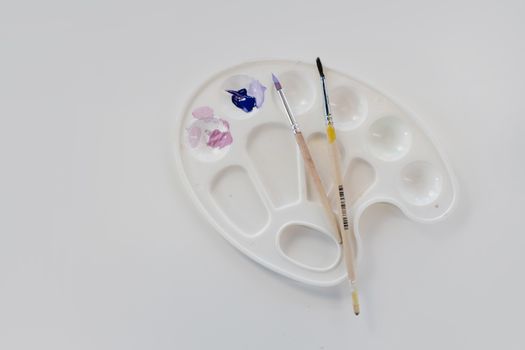
Flat lay of artist palette with brushes and paint on white surface, perfect for creative projects. Photo: cottonbro studio / Pexels
Embarking on your painting journey can feel overwhelming, especially when faced with the myriad of art supplies available. The good news is, you don't need to break the bank or acquire every single item in the art store to successfully learn how to start painting for beginners. The key is to start with a foundational set of materials that are versatile, forgiving, and budget-friendly. This strategic approach allows you to experiment and discover what you enjoy without a significant upfront investment. Let's delve into the absolute essentials. First and foremost, let's talk about paint. For beginners, acrylic paints are almost universally recommended. Why acrylics? They are water-soluble, meaning you can clean your brushes with just soap and water, and they dry relatively quickly, allowing for easy layering without long waiting times. They are also incredibly versatile, capable of being used thick like oils or thinned down like watercolors. Look for a basic set of primary colors (red, blue, yellow), plus white and black. A good quality student-grade set will serve you well without being too expensive. Brands like Liquitex Basics, Reeves, or Winsor & Newton Cotman are excellent starting points. Avoid craft store acrylics as they often have less pigment and a chalkier finish, which can be frustrating for learning techniques. Next up are brushes. You don't need a huge collection. A good starting set would include a few different shapes and sizes: a flat brush (1/2 inch or 1 inch) for broad strokes and covering larger areas, a round brush (size 4 or 6) for details and lines, and possibly a filbert brush for softer edges. Synthetic brushes are ideal for acrylics as they hold their shape well and are easy to clean. Again, student-grade options are perfectly adequate. Investing in one or two slightly better quality brushes can make a noticeable difference in application, but don't overdo it initially. Remember, the goal is to get comfortable with the tools, not to own the most expensive ones. Surfaces are another critical consideration. While canvas might seem like the obvious choice, canvas pads or even thick watercolor paper are fantastic for practice. They are less expensive, easier to store, and less intimidating than a pristine stretched canvas. Look for paper that is at least 140lb (300gsm) to prevent buckling when wet. You can also repurpose cardboard or wood panels, just make sure to prime them with gesso first. Gesso is a primer that prepares your surface, providing a consistent texture for the paint to adhere to and preventing it from soaking into absorbent materials. A small tub of white gesso will last you a long time and is a valuable addition to your kit. Finally, don't forget the miscellaneous items that make painting easier: a palette (a plastic plate, an old ceramic tile, or even parchment paper works wonders), a couple of water containers (old yogurt cups or jars are perfect for rinsing brushes), paper towels or an old rag for wiping brushes, and an easel if you prefer to paint upright (though painting flat on a table is perfectly fine for beginners). These seemingly small items contribute significantly to a smooth and enjoyable painting experience. By carefully selecting these essential supplies, you'll set yourself up for success and dive into the exciting world of painting without feeling overwhelmed. For more guidance on choosing your first materials, check out this guide to beginner art supplies.

Mastering the Fundamentals: Color Theory and Basic Techniques for Beginners

Smiling woman holding vibrant color wheel palettes indoors, showcasing creative design inspiration. Photo: Helena Lopes / Pexels
Once you have your basic supplies, the next step in learning how to start painting for beginners is to grasp some fundamental concepts. Painting is not just about putting color on a surface; it's about understanding how colors interact, how light and shadow create form, and how to manipulate your tools to achieve desired effects. These foundational principles will serve as the bedrock of your artistic development, regardless of the style or subject matter you eventually pursue. Color theory is arguably one of the most crucial aspects to tackle early on. Start with the color wheel. Understand primary colors (red, blue, yellow) – these cannot be mixed from other colors. Then, learn how to create secondary colors (orange, green, purple) by mixing two primaries. Tertiary colors are created by mixing a primary and a secondary color. Beyond basic mixing, explore complementary colors (colors opposite each other on the color wheel, like red and green, or blue and orange), which create strong contrast and vibrancy when placed next to each other. Analogous colors (colors next to each other on the color wheel, like blue, blue-green, and green) create harmonious and calm compositions. Experiment extensively with mixing colors on your palette. Don't be afraid to make a mess. This hands-on exploration is the best way to develop an intuitive understanding of how colors behave. Pay attention to how adding white lightens a color (creating tints) and how adding black darkens it (creating shades). Understanding these relationships will unlock a world of possibilities in your painting. Beyond color, developing basic brush control and understanding different painting techniques are paramount. Start with simple exercises. Practice making straight lines, curved lines, and dots with various brushes. Experiment with pressure – how does pressing harder or lighter change the stroke? Try dry brushing, where you use very little paint on a relatively dry brush to create textured effects. Explore wet-on-wet techniques, where you apply wet paint onto a wet surface or wet paint onto another wet layer, allowing colors to blend softly and organically. Conversely, practice wet-on-dry techniques, where you apply wet paint onto a dry surface or dry layer, which results in sharper edges and more distinct layers. Learning to layer effectively is key to building depth and complexity in your paintings. Start with thin layers, allowing each to dry before applying the next, especially with acrylics. This prevents muddying and allows colors to maintain their vibrancy. Another fundamental concept is understanding value, which refers to the lightness or darkness of a color. Before you even think about color, practice creating a grayscale value scale using just black and white paint. This exercise helps you see and reproduce different levels of light and shadow, which are essential for creating the illusion of three-dimensionality. Paint simple objects, focusing only on their values, using only black, white, and grays. This practice trains your eye to perceive form and light, which will dramatically improve your ability to render subjects realistically once color is introduced. Don't underestimate the power of value; a painting with strong values can be compelling even without color. Mastering these foundational elements will provide you with the confidence and skill set to move on to more complex subjects and compositions, truly setting you on the path to becoming a proficient painter.

From Simple Subjects to Expressive Art: Your First Painting Projects

A creative still life of paintbrushes in a jar with watercolors and pencils, perfect for artistic inspiration. Photo: WIERZBA PH / Pexels
With your supplies ready and a basic understanding of color theory and techniques, you're now poised for the most exciting part of learning how to start painting for beginners: creating your first artworks! The initial projects should be enjoyable, low-pressure, and designed to build confidence rather than demand perfection. Remember, every master artist started exactly where you are, with curiosity and a willingness to experiment. The goal here is to get comfortable with the process, to see what the paint can do, and to simply have fun. Start incredibly simple. Don't attempt a complex landscape or a portrait of a loved one as your very first piece. Instead, consider painting basic geometric shapes. Try a cube, a sphere, or a cylinder, focusing on how light hits them and creates shadows. This is a fantastic way to apply your understanding of value and form without the added pressure of realism. Once you're comfortable with shapes, move on to simple still life subjects. A single piece of fruit – an apple, an orange, or a pear – placed on a plain surface can be an excellent subject. Pay attention to its color variations, the highlights, and the cast shadow. These everyday objects provide endless opportunities to practice observation and rendering. You can even try painting a simple object from multiple angles to see how light and form change. Another excellent starting point is to copy simple images or photographs. Find a picture of a single flower, a simple tree, or a basic landscape with clear lines and shapes. Don't worry about making an exact replica; instead, focus on capturing the essential elements, the main colors, and the overall mood. This practice helps you understand composition and how to translate a three-dimensional scene onto a two-dimensional surface. There are many online resources and art books that offer step-by-step tutorials for beginner-friendly subjects. Follow along, but don't be afraid to deviate and add your own touch. This is your journey, and personal expression is key. Abstract painting is also a wonderful way to begin, as it removes the pressure of realism entirely. Experiment with colors and textures. Try dripping, splattering, or creating washes of color. Explore how different brushstrokes create different effects. Abstract art allows you to focus purely on the elements of design – line, shape, color, texture, and composition – without the constraints of representing a specific object. It can be incredibly liberating and help you discover your unique artistic voice. Consider creating a series of small, abstract studies, playing with a limited color palette in each to see what harmonies or contrasts you can achieve. Remember, each painting, whether it's a 'success' or a 'failure,' is a learning experience. Don't discard paintings you're not happy with; instead, keep them as a record of your progress. You'll be amazed at how far you've come after just a few weeks or months of consistent practice. For more inspiration on easy projects, explore this gallery of beginner painting ideas.

Common Pitfalls and Pro Tips for Flourishing as a Beginner Painter

Young girl in an art studio painting on a canvas with various art materials around her. Photo: Vlada Karpovich / Pexels
As you delve deeper into how to start painting for beginners, you'll inevitably encounter challenges and make mistakes. This is a natural and essential part of the learning process. Recognizing common pitfalls and adopting smart strategies can significantly accelerate your growth and keep your enthusiasm high. Here are some key mistakes to avoid and valuable tips to help you flourish on your artistic journey. **Common Pitfalls to Avoid:** * **Overspending on Supplies:** As discussed, expensive supplies don't make a better artist. Start basic and upgrade only when you understand your specific needs and preferences. Many beginners buy costly sets only to find they don't enjoy the medium or only use a fraction of the items. * **Aiming for Perfection Too Soon:** This is perhaps the biggest creativity killer. Your first paintings will not be masterpieces, and that's perfectly okay. Embrace the imperfections, learn from them, and view each piece as a stepping stone. Focusing on perfection leads to frustration and giving up. * **Comparing Yourself to Others:** The internet is full of incredible artists. While inspiring, constant comparison can be demoralizing. Focus on your own progress and celebrate your unique artistic voice. Your journey is yours alone. * **Not Cleaning Brushes Properly:** Dried paint can ruin brushes quickly. Always clean your brushes thoroughly immediately after use. This prolongs their life and ensures consistent application in future paintings. * **Painting Too Dark Too Soon:** It's often easier to add darker values and colors than to lighten them. Start with lighter tones and gradually build up your darks. This allows for more flexibility and correction. * **Ignoring Fundamentals:** Skipping basic exercises in color mixing, value studies, or brush control might seem faster, but it often leads to frustration down the line. A strong foundation makes advanced techniques much easier to grasp. **Pro Tips for Beginners:** * **Paint Regularly, Even for Short Periods:** Consistency is more important than long, infrequent sessions. Even 15-30 minutes a few times a week can make a significant difference in skill development and muscle memory. * **Keep a Sketchbook:** Use a sketchbook not just for drawing, but for color studies, trying out compositions, and making notes about colors you mixed. It's a low-pressure space to experiment. * **Learn from Others (Tutorials & Workshops):** Online tutorials (YouTube, Skillshare), local art classes, or workshops can provide structured learning and introduce you to new techniques. Watching experienced artists paint is incredibly insightful. * **Work in Layers (Especially with Acrylics):** Building up your painting in layers, from thin washes to thicker applications, allows for greater depth, control, and the ability to make adjustments as you go. * **Use a Limited Palette:** Instead of using every color you own, try painting with a limited palette (e.g., two primaries, white, and a neutral). This forces you to understand color mixing deeply and creates more harmonious paintings. * **Take Breaks and Step Back:** When you're struggling or feeling stuck, step away from your painting for a few minutes or even a few hours. When you return with fresh eyes, you'll often spot solutions or areas for improvement you missed before. * **Document Your Progress:** Take photos of your finished paintings, even the ones you don't love. Looking back at your early work will show you how much you've grown and serve as a powerful motivator. * **Don't Be Afraid to Experiment:** Try different mediums, techniques, and subjects. The beauty of art is its endless possibilities. Your unique style will emerge through exploration and play. By keeping these tips in mind and consciously avoiding common pitfalls, you'll create a supportive and productive environment for your artistic growth. Remember, every stroke is a lesson, and every finished piece, regardless of its outcome, is a testament to your dedication and creativity. Keep painting, keep learning, and most importantly, keep enjoying the process of creation.

Comparison

FeatureAcrylic Paints (Best for Beginners)Oil Paints (Intermediate/Advanced)Watercolor Paints (Challenging for Beginners)
Drying TimeFast (minutes)Slow (hours/days)Fast (minutes)
CleanupWater & SoapMineral Spirits/SolventsWater
VersatilityHigh (thick/thin, opaque/transparent)High (rich, blendable, opaque)Medium (transparent, delicate)
Cost (Student Grade)Low to MediumMedium to HighLow to Medium
Blending DifficultyMedium (dries fast)Easy (long open time)Difficult (dries fast, unforgiving)
Surface OptionsCanvas, Paper, Wood, FabricCanvas, Wood, Primed SurfacesWatercolor Paper
ForgivenessHigh (can layer over mistakes)High (can easily rework)Low (mistakes are hard to hide)

What Readers Say

"This guide made how to start painting for beginners feel so accessible! I was intimidated by all the choices, but the supply recommendations were perfect. I've already finished two small paintings!"

Sarah J. · Austin, TX

"I always wanted to try painting but never knew where to begin. The step-by-step approach here really broke it down. I'm now confidently experimenting with color mixing, which felt impossible before."

Mark D. · Portland, OR

"Following this guide, I set up a small painting station in my apartment. The emphasis on starting simple and not aiming for perfection really resonated and helped me overcome my fear of the blank canvas. My confidence has soared!"

Emily R. · Chicago, IL

"The tips on avoiding common pitfalls were particularly helpful. I almost bought expensive oil paints, but this guide correctly steered me towards acrylics for my first attempts. Wish there were a few more specific project ideas, but overall, a fantastic resource."

David L. · Miami, FL

"As a complete novice, I found the explanation of color theory incredibly clear and easy to understand. This article truly empowers anyone who wants to learn how to start painting for beginners. Highly recommend!"

Jessica M. · Denver, CO

Frequently Asked Questions

What's the absolute best type of paint for someone just starting out?

For beginners, acrylic paints are widely considered the best choice. They are water-soluble for easy cleanup, dry quickly allowing for layering, and are versatile enough to mimic both oil and watercolor effects. Their forgiving nature makes them ideal for experimentation without much frustration.

I'm worried my paintings will look terrible. How do I overcome this fear?

It's completely normal to feel this way! The key is to shift your mindset from 'creating a masterpiece' to 'learning and experimenting.' Every painting, good or 'bad,' is a learning experience. Focus on the process, enjoy the act of creating, and remember that even professional artists make pieces they don't love. Practice builds skill, not perfection on day one.

What are the first steps I should take when I sit down to paint?

First, gather all your supplies and set up your workspace. Next, mix your colors on your palette, starting with your main hues. Then, sketch out your basic composition lightly on your surface. Finally, begin with broad strokes and lighter values, gradually building up to details and darker tones. Don't forget to have a water container and paper towels handy!

How much does it cost to get started with painting as a beginner?

You can start painting for as little as $30-$50 for basic student-grade acrylic paints, a few brushes, and a pad of paper. While you can spend much more, it's highly recommended to begin with affordable essentials to ensure you enjoy the hobby before investing heavily. Value comes from consistent practice, not expensive tools.

Is it better to take a class or learn from online tutorials when starting to paint?

Both methods have their merits! Classes offer personalized feedback and a structured environment, which can be very beneficial for beginners. Online tutorials provide flexibility and a vast array of styles and techniques to explore from the comfort of your home. Many find a combination of both to be most effective – using online resources for initial practice and classes for deeper dives or specific challenges.

Who should consider learning how to start painting for beginners?

Anyone with a creative spark, a desire to express themselves, or simply someone looking for a relaxing and fulfilling hobby should consider learning to paint. It's a wonderful way to de-stress, develop new skills, and see the world with a fresh, artistic perspective. Age, prior experience, or 'talent' are not prerequisites.

Are there any safety concerns with beginner painting supplies?

For most beginner-friendly paints like acrylics and watercolors, safety concerns are minimal. They are generally non-toxic and water-based. However, always ensure good ventilation, especially if using any spray fixatives or mediums. Avoid ingesting paint and wash hands thoroughly after painting. If you ever move to oil paints, be mindful of solvents and their proper disposal.

What are some emerging trends in painting that beginners might find inspiring?

Contemporary trends include digital painting (which can often mimic traditional techniques), abstract expressionism, fluid art (pour painting), and incorporating mixed media. Many artists are also focusing on sustainable art practices, using recycled materials or eco-friendly paints. Exploring these can offer fresh perspectives and modern avenues for self-expression, even as a beginner.

Ready to unleash your inner artist? This comprehensive guide on how to start painting for beginners provides all the essential knowledge and encouragement you need. Gather your basic supplies, embrace the learning process, and discover the joy of creating. Your artistic journey begins now!

Topics: how to start painting for beginnersbeginner painting supplieseasy painting techniquesfirst painting stepspainting for novices