✓ The Renaissance originated in Florence, Italy, in the 14th century.
✓ Key characteristics include humanism, perspective, and naturalism.
✓ Major phases are Early, High, and Late (Mannerism) Renaissance.
✓ Artists like Leonardo da Vinci, Michelangelo, and Raphael defined the era.
How It Works
1
Understand the Precursors
Delve into the societal and philosophical shifts of the late Middle Ages that laid the groundwork for the Renaissance. Recognize the nascent humanistic ideas that challenged medieval dogma.
2
Explore Key Artistic Innovations
Examine the technical breakthroughs such as linear perspective, sfumato, and chiaroscuro. Appreciate how these innovations brought unprecedented realism and depth to art.
3
Meet the Masters and Their Works
Discover the lives and masterpieces of pivotal artists like Giotto, Masaccio, Donatello, Botticelli, Leonardo, Michelangelo, and Raphael. Understand their unique contributions and styles.
4
Grasp the Lasting Legacy
Recognize the profound and enduring influence of Renaissance art on subsequent Western art movements and culture. See how its principles continue to resonate in contemporary aesthetics.
The Genesis of a Golden Age: Early Renaissance Art
Photo: Jing Zhan / Pexels
The history of Renaissance art did not emerge in a vacuum; it was the culmination of centuries of cultural and intellectual fermentation that reached its boiling point in 14th-century Italy. Often cited as the birthplace of the Renaissance, Florence became the epicenter of this artistic revolution, driven by a renewed interest in classical antiquity and a burgeoning humanistic philosophy. This period marked a distinct departure from the predominantly religious and symbolic art of the Middle Ages, shifting focus towards human experience, naturalism, and individual achievement.
The Early Renaissance, roughly spanning from 1400 to 1490, witnessed foundational innovations that would forever alter the course of Western art. Artists began to meticulously study human anatomy, drapery, and the effects of light, striving for a more realistic and emotionally resonant portrayal of their subjects. Filippo Brunelleschi, a brilliant architect and engineer, is credited with formalizing linear perspective, a revolutionary technique that allowed artists to create the illusion of three-dimensional space on a two-dimensional surface. This scientific approach to art was a radical departure and provided artists with an unprecedented tool for realism. Masaccio, a contemporary of Brunelleschi, was one of the first painters to fully embrace and apply linear perspective, as seen in his groundbreaking fresco 'The Holy Trinity' in Santa Maria Novella, Florence. His figures possessed a weight and solidity previously unseen, demonstrating a profound understanding of human form and emotion.
Sculpture also underwent a dramatic transformation. Donatello, another Florentine master, broke away from the stylized forms of Gothic sculpture, drawing inspiration directly from classical Greek and Roman statues. His 'David,' cast in bronze around 1440, is a pivotal work, not only for being the first free-standing nude male sculpture since antiquity but also for its naturalistic pose and psychological depth. This emphasis on the human body as a subject of beauty and study was a hallmark of the burgeoning humanism that permeated the era. Artists like Sandro Botticelli, though later embracing a more ethereal and decorative style, also contributed significantly to the Early Renaissance, with iconic works like 'The Birth of Venus' and 'Primavera' celebrating classical mythology and ideal beauty. These works, commissioned by powerful patrons like the Medici family, not only showcased artistic skill but also reflected the intellectual and cultural aspirations of their time. The Early Renaissance laid the essential groundwork, both technically and philosophically, for the explosion of artistic genius that would follow. It was a period of intense experimentation and discovery, where artists, patrons, and scholars collaborated to revive and reinvent the artistic traditions of the past, paving the way for the High Renaissance. To truly appreciate the depth of this period, one must explore the intricate relationship between art and the evolving societal structure, where new ideas about humanity and the world were taking shape. This fascinating interplay of art and culture is a cornerstone of understanding the broader history of arts.
Pinnacle of Perfection: The High Renaissance
Photo: Alina Rossoshanska / Pexels
The High Renaissance, generally considered to have flourished from around 1490 to 1527, represents the zenith of artistic achievement in the history of Renaissance art. This relatively brief but intensely productive period saw the emergence of titans whose names have become synonymous with artistic genius: Leonardo da Vinci, Michelangelo, and Raphael. Their combined contributions pushed the boundaries of art to unprecedented levels of technical mastery, emotional depth, and intellectual sophistication. The focus shifted from mere naturalism to an idealized beauty, a sense of grandeur, and a profound psychological insight into the human condition.
Leonardo da Vinci, the quintessential 'Renaissance Man,' epitomized the era's spirit of curiosity and innovation. His insatiable quest for knowledge spanned art, science, engineering, and anatomy. In his painting, Leonardo perfected techniques like sfumato, a soft, hazy rendering of forms that creates a subtle transition between colors and tones, lending a mysterious and ethereal quality to his subjects. His 'Mona Lisa,' with its enigmatic smile, and 'The Last Supper,' a monumental fresco filled with dramatic tension and psychological insight, are testaments to his mastery of composition, expression, and light. Leonardo’s scientific studies directly informed his art, allowing him to render the human form with unparalleled accuracy and vitality.
Michelangelo Buonarroti, a sculptor, painter, architect, and poet, embodied the concept of 'terribilità' – a sense of awe-inspiring power and grandeur. His works often depicted heroic, muscular figures, infused with intense emotion and spiritual depth. The colossal 'David,' carved from a single block of marble, showcases his profound understanding of human anatomy and his ability to convey immense power and dignity. On the ceiling of the Sistine Chapel, Michelangelo created one of the most ambitious and breathtaking frescoes in art history, depicting scenes from the Book of Genesis. This monumental undertaking, featuring hundreds of figures, solidifies his reputation as a master of the human form and narrative composition. His 'Pietà' in St. Peter's Basilica, a poignant depiction of Mary cradling the dead Christ, demonstrates his capacity for tenderness and profound pathos.
Raphael Sanzio, though tragically short-lived, achieved an unparalleled sense of harmony, grace, and clarity in his art. He was particularly renowned for his Madonnas, which combined ideal beauty with accessible human tenderness. His frescoes in the Vatican's Stanze della Segnatura, particularly 'The School of Athens,' are masterpieces of composition, perspective, and intellectual scope. 'The School of Athens' brings together ancient Greek philosophers in a grand architectural setting, symbolizing the synthesis of classical wisdom and Christian thought that was central to Renaissance humanism. Raphael’s ability to create balanced, serene, and exquisitely beautiful compositions made him one of the most sought-after artists of his time. Together, these three masters defined the High Renaissance, creating works that continue to inspire and awe viewers centuries later, cementing their place as cornerstones in the history of art.
Beyond Perfection: Mannerism and the Late Renaissance
Photo: Leah Newhouse / Pexels
As the High Renaissance reached its sublime peak, a new artistic style began to emerge, often referred to as Mannerism, marking the Late Renaissance period (roughly 1520-1600). This movement, while still rooted in the innovations of the High Renaissance, deliberately moved away from its classical ideals of harmony, balance, and naturalism. Instead, Mannerist artists sought to express their own individual artistic voice, often through exaggeration, artificiality, and sophisticated complexity. This shift reflected a changing cultural landscape, one marked by political upheaval, religious reformation, and a growing sense of intellectual anxiety following the Sack of Rome in 1527, which profoundly impacted the artistic community.
Mannerism is characterized by several key stylistic traits. Figures often appear elongated, twisted into serpentine poses (figura serpentinata), and are placed in compressed or ambiguous spaces. Colors are frequently vibrant, sometimes dissonant, and lighting can be theatrical or unnatural, creating a sense of tension and unease. The emotional intensity is heightened, and compositions can be deliberately complex or even unsettling, challenging the viewer's expectations. Artists were no longer merely imitating nature but were interpreting it through a highly personal and stylized lens. This was, in essence, art about art, showcasing the artist's virtuosity and intellectual prowess rather than solely focusing on realistic depiction.
Prominent Mannerist painters include Jacopo Pontormo, Rosso Fiorentino, Parmigianino, and Bronzino. Pontormo's 'Deposition from the Cross' is a seminal Mannerist work, with its swirling composition, vibrant, almost acidic colors, and figures that seem weightless and emotionally charged, defying gravitational logic. Parmigianino's 'Madonna with the Long Neck' exemplifies the elongated figures and elegant, yet unsettling, proportions characteristic of the style. Bronzino, a master portraitist, created highly polished and aristocratic portraits that emphasized the sitter's status and sophistication, often with an air of detached coolness. His 'Allegory with Venus and Cupid' is a complex and enigmatic painting, packed with symbolic meaning and showcasing the Mannerist fascination with intricate allegory.
Sculpture also embraced Mannerist principles. Giambologna, a Flemish sculptor working in Florence, created dynamic and multi-viewpoint sculptures like 'The Rape of the Sabine Women,' which perfectly embody the figura serpentinata. These works invited viewers to walk around them, experiencing a shifting narrative and complex interplay of forms from every angle. The architectural designs of Giulio Romano, a pupil of Raphael, also demonstrate Mannerist tendencies, with their playful subversion of classical rules and unexpected juxtapositions. While initially viewed by some as a decline from the perfection of the High Renaissance, Mannerism is now recognized as a vital bridge between the Renaissance and the Baroque era, demonstrating a sophisticated artistic response to a changing world and a profound exploration of artistic expression itself. Understanding this transition is crucial for a complete grasp of the evolution of art through the ages.
Lasting Legacy: Impact and Interpretation of Renaissance Art
Photo: Magda Ehlers / Pexels
The history of Renaissance art is not merely a chronicle of past achievements; it is the foundation upon which much of Western art and culture has been built. The innovations, philosophies, and masterpieces of this era left an indelible mark, influencing subsequent artistic movements, shaping aesthetic sensibilities, and forever altering the perception of the artist's role in society.
One of the most profound impacts was the elevation of the artist's status. No longer merely skilled craftsmen, Renaissance artists became revered intellectuals, thinkers, and innovators, often mingling with princes, popes, and philosophers. Figures like Leonardo and Michelangelo were seen as geniuses, their creative output celebrated as a reflection of divine inspiration and human potential. This shift paved the way for the Romantic notion of the artist as a singular, visionary individual.
The technical advancements, particularly linear perspective, anatomical accuracy, and the use of oil paint, became standard practices for centuries. Artists across Europe studied and emulated the techniques developed in Italy, leading to a widespread adoption of Renaissance principles. The emphasis on humanism – valuing human achievement, reason, and individual dignity – permeated not just art but also literature, philosophy, and science, fundamentally shaping the Enlightenment and modern thought.
The Renaissance also solidified the concept of art patronage, where wealthy individuals, families (like the Medici), and the Church commissioned works not just for devotion but also for prestige, education, and aesthetic pleasure. This system fostered artistic talent and allowed for the creation of monumental works that might otherwise have been impossible. The enduring presence of Renaissance masterpieces in museums and galleries worldwide continues to draw millions, serving as a testament to their universal appeal and artistic merit.
Even today, artists and scholars continue to interpret and reinterpret Renaissance art, finding new layers of meaning and relevance. Its themes of humanity, divinity, beauty, and suffering remain timeless. Understanding the Renaissance is crucial for anyone seeking to grasp the trajectory of Western civilization, as it was a period where the seeds of modernity were sown. Its legacy is not just in the paintings and sculptures themselves, but in the enduring spirit of inquiry, innovation, and belief in human potential that it fostered. To neglect this period is to miss a fundamental chapter in the story of human creativity.
Here are some common misconceptions about Renaissance art:
* **Myth 1: It was a sudden, unified movement.** While impactful, the Renaissance evolved over centuries and varied across regions, with distinct phases and styles.
* **Myth 2: It completely rejected medieval art.** Many Renaissance artists built upon medieval traditions, incorporating elements while introducing new techniques and philosophies.
* **Myth 3: All Renaissance art was religious.** While religious themes were prominent, there was a significant rise in secular art, including portraits, mythological scenes, and historical subjects.
* **Myth 4: Only Italy experienced the Renaissance.** While Italy was its heartland, the Northern Renaissance (Flanders, Netherlands, Germany) developed concurrently with its own distinct characteristics.
* **Myth 5: It was exclusively about realism.** While realism was a goal, especially in the Early Renaissance, the High Renaissance aimed for idealized beauty, and Mannerism moved towards artistic interpretation rather than strict imitation.
Comparison
Feature
Early Renaissance
High Renaissance
Mannerism
Timeline
c. 1400-1490
c. 1490-1527
c. 1520-1600
Key Focus
Naturalism, Perspective
Idealized Beauty, Harmony
Artifice, Exaggeration
Composition
Balanced, Grounded
Symmetrical, Grand
Complex, Asymmetrical
Figures
Realistic, Solid
Heroic, Idealized
Elongated, Twisted
Emotional Tone
Emergent Humanism
Profound, Serene
Tense, Dramatic
Key Artists
Masaccio, Donatello, Botticelli
Leonardo, Michelangelo, Raphael
Pontormo, Parmigianino, Bronzino
Impact
Foundation of new art
Pinnacle of classical ideals
Bridge to Baroque
What Readers Say
★★★★★
"This article provided such a comprehensive overview of the history of Renaissance art. I finally understand the progression from Early to High Renaissance and the nuances of Mannerism. It's incredibly well-researched and engaging."
Sarah Chen · New York, NY
★★★★★
"As an art history student, I found this piece invaluable. The detailed descriptions of key artists and their innovations truly brought the period to life. It's a fantastic resource for anyone studying the Renaissance."
David Rodriguez · Los Angeles, CA
★★★★★
"Before reading this, I only knew a few famous names. Now, I have a deep appreciation for the entire history of Renaissance art, from Brunelleschi's perspective to Michelangelo's grandeur. My next museum visit will be so much richer!"
Emily White · Chicago, IL
★★★★★
"The article is exceptionally thorough and well-written. While it covers a lot of ground, I might have liked a bit more on the Northern Renaissance to round out the global picture, but still a brilliant read on Italian art."
Mark Johnson · Houston, TX
★★★★★
"I'm a casual art enthusiast, and this article made the complex history of Renaissance art so accessible and fascinating. The explanations of artistic techniques and philosophical shifts were particularly clear and helpful."
Jessica Lee · Miami, FL
Frequently Asked Questions
What are the main periods within the history of Renaissance art?
The history of Renaissance art is generally divided into three main periods: the Early Renaissance (c. 1400-1490), characterized by foundational innovations like linear perspective; the High Renaissance (c. 1490-1527), the peak of artistic perfection with masters like Leonardo, Michelangelo, and Raphael; and the Late Renaissance or Mannerism (c. 1520-1600), which saw a move towards more stylized and artificial forms.
Was Renaissance art exclusively religious?
While religious themes were indeed very prominent and commissioned by the Church, Renaissance art was far from exclusively religious. There was a significant rise in secular art, including portraits of prominent individuals, mythological scenes inspired by classical antiquity, and historical narratives, reflecting the era's burgeoning humanism and interest in worldly subjects.
How did linear perspective revolutionize Renaissance art?
Linear perspective, formalized by Filippo Brunelleschi, was a groundbreaking innovation that allowed artists to create the illusion of three-dimensional depth on a two-dimensional surface. By establishing a vanishing point and orthogonal lines, artists could accurately depict space, making their paintings and frescoes appear more realistic and immersive, a stark contrast to the flatter, symbolic art of the Middle Ages.
What is the economic value or significance of Renaissance art today?
The economic value of Renaissance art today is immense, with masterpieces fetching millions, if not billions, on the rare occasions they come to market. Beyond monetary value, its cultural and educational significance is immeasurable. These works are cornerstones of global heritage, inspiring new generations and providing profound insights into human creativity, history, and philosophy.
How does Italian Renaissance art compare to the Northern Renaissance?
While both shared a renewed interest in naturalism, Italian Renaissance art focused more on idealized human forms, classical antiquity, and theoretical principles like linear perspective. The Northern Renaissance, conversely, often emphasized minute detail, rich symbolism, and a more earthy realism, often utilizing oil paint to achieve luminous textures and intricate surfaces, with less emphasis on classical grandeur.
Who should study the history of Renaissance art?
Anyone with an interest in art, history, philosophy, or Western culture should study the history of Renaissance art. It's essential for art students, historians, cultural enthusiasts, or simply individuals who wish to deepen their appreciation for the masterpieces that shaped our modern world and continue to inspire awe and critical thought.
Are there any ethical concerns related to the acquisition or display of Renaissance art?
Yes, ethical concerns often arise, particularly regarding provenance and restitution. Issues include works looted during wars, pieces acquired through colonial exploitation, or those with unclear ownership histories. Modern museums and collectors face increasing scrutiny to ensure ethical acquisition and transparent display practices, addressing historical injustices in the art world.
What future trends are influencing the interpretation of Renaissance art?
Future trends in interpreting Renaissance art include leveraging digital humanities for detailed analysis and virtual reconstructions, exploring global connections and influences beyond Italy, and re-examining the roles of marginalized figures (e.g., women artists, non-European influences). There's also a growing focus on the environmental and material history of art, understanding the resources and craftsmanship involved.
Embark on your own journey through the history of Renaissance art. Explore the timeless masterpieces and profound ideas that continue to shape our world, and let the genius of this extraordinary era inspire you.

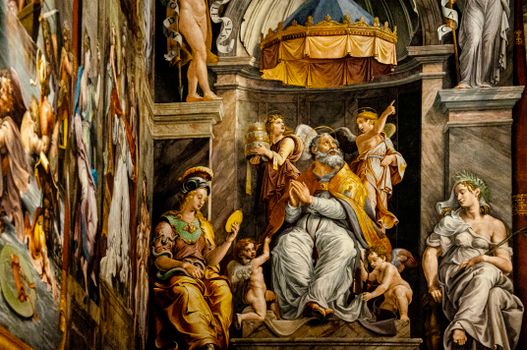 Photo: Jing Zhan / Pexels
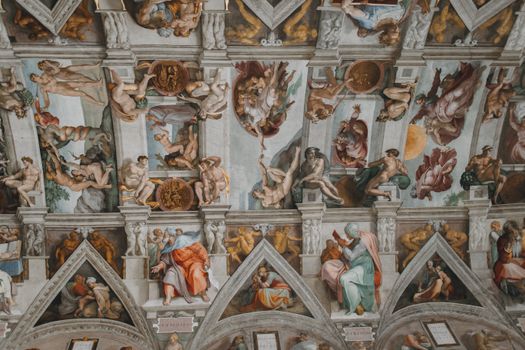 Photo: Alina Rossoshanska / Pexels
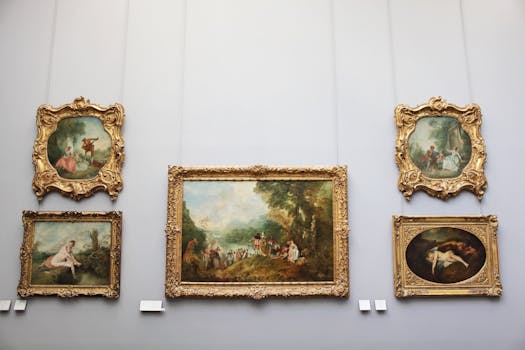 Photo: Leah Newhouse / Pexels
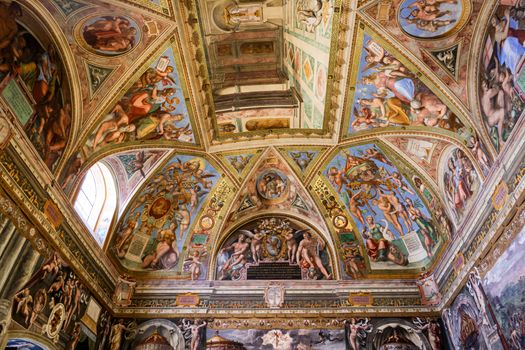 Photo: Magda Ehlers / Pexels