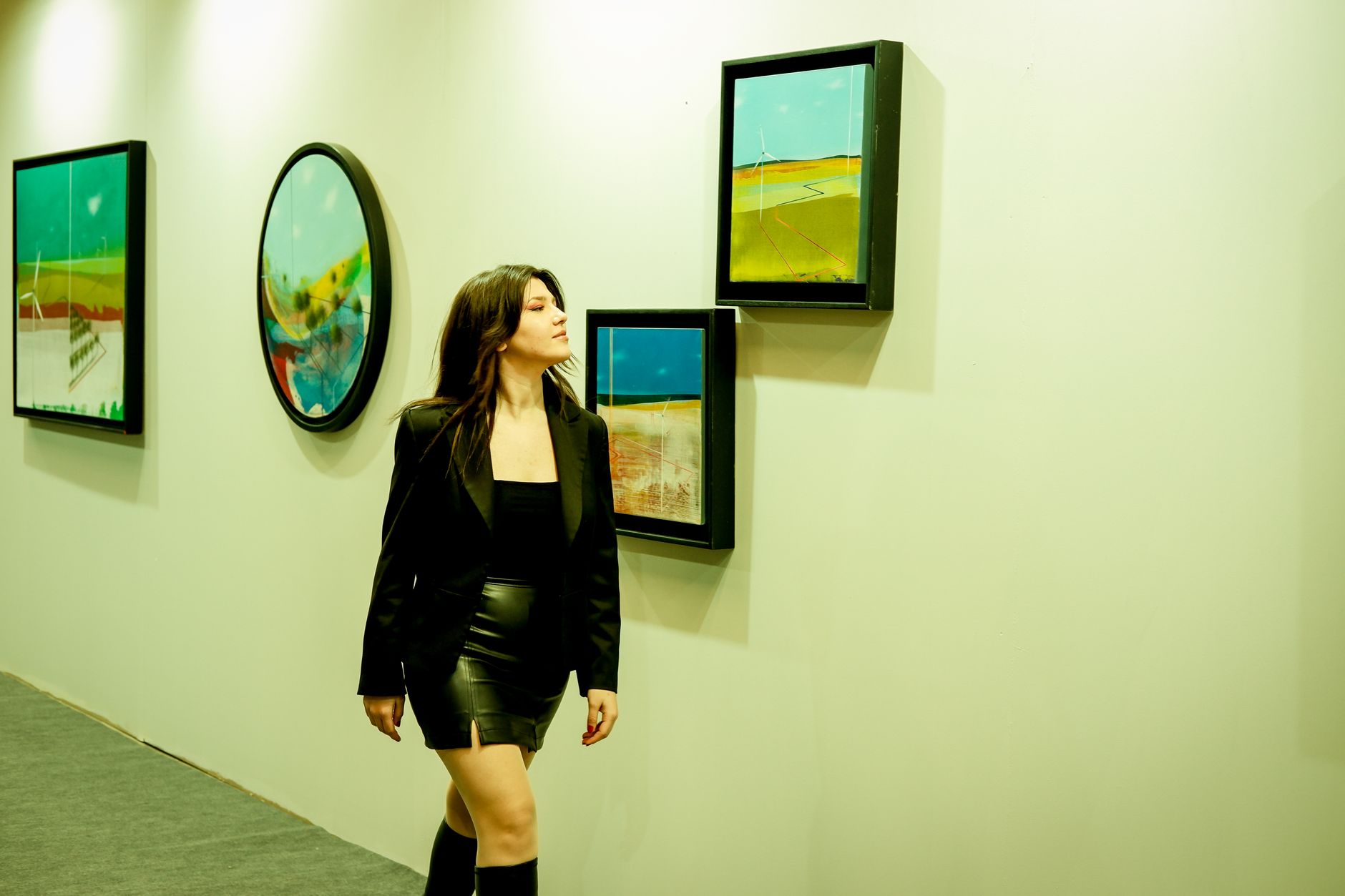
Unveiling the History of Modern Art Movements
history of modern art movements

Unveiling the History of Modern Art Movements

Journey through the revolutionary shifts that defined modern art, transforming perception and expression forever.

Begin Your Art Journey

Key Takeaways

  • ✓ Modern art movements challenged traditional academic styles.
  • ✓ Impressionism marked a pivotal break, focusing on light and atmosphere.
  • ✓ Cubism revolutionized perspective and form, influencing many subsequent styles.
  • ✓ Abstract Expressionism placed emphasis on emotion and spontaneity.

How It Works

1
Understand the Precursors

Begin by grasping the academic traditions and societal shifts that set the stage for modern art's emergence. This context highlights the radical nature of the new movements.

2
Explore Key Movements Chronologically

Delve into each major movement, from Impressionism to Surrealism, understanding their core philosophies and artistic innovations. Observe how each builds upon or reacts to its predecessors.

3
Identify Influential Artists

Learn about the pivotal figures within each movement who championed new techniques and ideas. Their individual contributions often defined the movement's character and direction.

4
Recognize Enduring Legacies

Appreciate how these historical movements continue to influence contemporary art, design, and culture. Modern art's impact extends far beyond the canvas, shaping our visual world.

The Dawn of Modern Art: Breaking from Tradition
Colorful streaks of light blend in an abstract motion blur, creating a dynamic and vibrant effect. Photo: Mathias Reding / Pexels
The late 19th and early 20th centuries witnessed an unprecedented upheaval in the art world, marking the true beginning of the history of modern art movements. For centuries, Western art had largely adhered to the strictures of academic tradition, emphasizing realistic representation, historical or mythological subjects, and classical techniques. The French Salon, for instance, served as the primary arbiter of artistic taste, often rejecting anything that strayed from its conservative ideals. However, societal changes—industrialization, burgeoning urban centers, new scientific discoveries (like photography), and evolving philosophical thought—began to erode the foundations of this established order. Artists started questioning the very purpose of art, seeking new ways to express the rapidly changing world and their internal experiences. This period saw a shift from external reality as the sole subject to the artist's subjective perception and emotional truth. Impressionism, often cited as the first truly modern art movement, emerged from this fertile ground of discontent and innovation. Led by figures like Claude Monet, Edgar Degas, and Pierre-Auguste Renoir, Impressionists rejected the formal compositions and polished finishes of academic painting. Instead, they focused on capturing the fleeting effects of light and atmosphere, often painting outdoors (en plein air) to render the immediate sensation of a moment. Their brushstrokes were visible, colors were vibrant and often unmixed, and subjects were frequently scenes from contemporary life—landscapes, cityscapes, portraits of ordinary people. This radical approach initially met with scorn from critics, who derisively labeled their work 'impressions,' but it paved the way for an explosion of artistic freedom. Post-Impressionism followed, with artists like Vincent van Gogh, Paul Cézanne, and Paul Gauguin taking the Impressionists' innovations further, injecting more personal emotion, symbolic meaning, and structural rigor into their work. Van Gogh's expressive brushwork and intense colors, Cézanne's exploration of form and multiple perspectives, and Gauguin's vibrant, symbolic depictions of exotic cultures all demonstrated a profound desire to move beyond mere optical realism. These early movements weren't just about changing painting styles; they represented a fundamental re-evaluation of what art could be and do. They liberated artists from the constraints of patronage and academic dictates, empowering them to explore personal vision and subjective experience. This foundational period laid the groundwork for the radical experimentation that would define the rest of the 20th century. Understanding these initial breaks from tradition is crucial to appreciating the subsequent developments in art history and the continuous evolution of artistic expression.

Revolutionizing Form and Emotion: Cubism to Surrealism
Dynamic abstract art with vivid colors and bold brushstrokes. Photo: Steve A Johnson / Pexels
As the 20th century unfolded, the pace of artistic innovation accelerated dramatically, giving rise to movements that profoundly reshaped how we perceive reality and express inner worlds. Cubism, pioneered by Pablo Picasso and Georges Braque around 1907, stands as one of the most intellectually rigorous and visually revolutionary movements in the history of modern art movements. Inspired in part by Paul Cézanne's late work and African sculpture, Cubism shattered traditional perspective, depicting subjects from multiple viewpoints simultaneously. Objects were broken down into geometric forms and reassembled, creating fragmented and often abstract compositions. This wasn't merely a stylistic choice; it was a profound philosophical statement about the nature of perception and representation. Analytic Cubism (early phase) focused on deconstructing forms into geometric planes with muted colors, while Synthetic Cubism (later phase) reintroduced color, texture, and collage elements, often incorporating bits of newspaper or fabric into the artwork. The impact of Cubism was immense, influencing virtually every subsequent abstract art movement. Contemporaneously, other movements emerged, each pushing different boundaries. Futurism, born in Italy, celebrated technology, speed, and the dynamism of modern life, often depicting movement and machinery in fragmented, energetic compositions. Dada, a response to the horrors of World War I, was an anti-art movement that questioned reason, logic, and societal values. Dadaists used absurdity, collage, and readymades (everyday objects presented as art) to provoke thought and challenge the very definition of art. Marcel Duchamp's 'Fountain,' a urinal signed 'R. Mutt,' remains one of the most iconic and controversial works of the movement. From the chaotic energy of Dada emerged Surrealism, founded by André Breton in the 1920s. Deeply influenced by Sigmund Freud's theories of the unconscious mind, Surrealists sought to unlock the power of dreams, irrationality, and subconscious desires. Artists like Salvador Dalí, René Magritte, and Joan Miró created bizarre, dreamlike landscapes and juxtaposed unexpected objects, aiming to liberate the imagination from rational control. Surrealism extended beyond painting, influencing literature, film, and photography, and its legacy can be seen in much of today's visual culture. These movements, from the intellectual rigor of Cubism to the psychological depths of Surrealism, demonstrated a profound commitment to challenging existing norms. They expanded the artistic vocabulary, introducing abstraction, collage, and psychological exploration as legitimate artistic tools. Their collective efforts irrevocably altered the trajectory of art, proving that art could be not just beautiful, but also intellectually stimulating, politically subversive, and deeply personal.

Post-War Expressions and the Rise of Abstraction
Dynamic abstract expressionist artwork with bold colors and textures. Photo: Steve A Johnson / Pexels
The mid-20th century, particularly the period following World War II, ushered in another seismic shift in the history of modern art movements. The devastation of the war, coupled with the existential anxieties of the Cold War era, profoundly impacted artists, leading many to seek new forms of expression that could convey the profound emotional and psychological landscapes of their time. The center of the art world also began to shift from Paris to New York, giving rise to a distinctly American avant-garde. Abstract Expressionism emerged as the dominant force in American art during the 1940s and 1950s. This movement emphasized spontaneous, gestural, and non-representational painting, focusing on the act of creation itself as a form of emotional release. Artists like Jackson Pollock, known for his revolutionary 'drip paintings,' poured and splattered paint onto canvases laid on the floor, transforming the canvas into an arena for action. Willem de Kooning's energetic brushstrokes and Mark Rothko's luminous color fields, designed to evoke spiritual and emotional responses, also exemplify the movement's diverse approaches. Abstract Expressionism was not about depicting external reality; it was about conveying inner states, raw emotion, and the universal human condition through abstract forms and colors. It marked a significant break from European traditions of representation and narrative. Following Abstract Expressionism, several other significant movements arose, often in reaction to its intense subjectivity. Pop Art, emerging in the late 1950s and flourishing in the 1960s, embraced popular culture, advertising, and mass production. Artists like Andy Warhol, Roy Lichtenstein, and Claes Oldenburg drew inspiration from comic books, celebrity portraits, and everyday consumer products, challenging the perceived elitism of fine art. Pop Art often employed irony and appropriation, blurring the lines between high art and popular culture and reflecting the burgeoning consumer society. Minimalism, another influential movement of the 1960s, reacted against the emotional intensity of Abstract Expressionism and the commercialism of Pop Art. Minimalist artists like Donald Judd and Dan Flavin sought to strip art down to its most essential elements, using simple geometric forms, industrial materials, and repetitive structures. Their focus was on the object itself, its physical presence, and the viewer's direct experience of it, often eliminating any personal expression or symbolic meaning. These post-war movements, while diverse in their aesthetics and philosophies, collectively pushed the boundaries of art even further. They questioned the very definition of art, explored the relationship between art and society, and expanded the possibilities of abstraction and conceptual expression. Their legacy continues to inform contemporary art practices, reminding us that art is a constantly evolving dialogue between the artist, the viewer, and the ever-changing world, as explored in various art movements throughout history.

Navigating the Later 20th Century: Postmodernism and Beyond
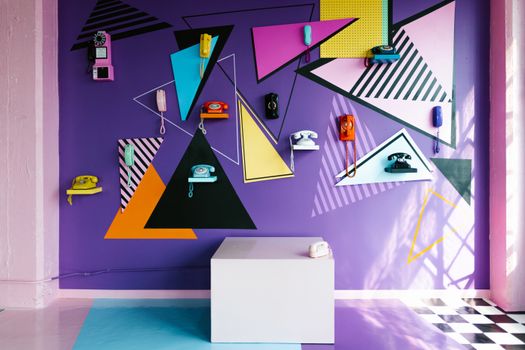
Vibrant display of vintage telephones on a geometric-patterned wall in an indoor setting. Photo: RDNE Stock project / Pexels
As the 20th century drew to a close and continues into the 21st, the concept of 'modern art' itself became a subject of intense scrutiny, leading to the rise of Postmodernism and a period of artistic pluralism. Postmodernism, which gained prominence in the 1970s and beyond, isn't a single style but rather a critical stance that questions the 'grand narratives' and universal truths often associated with modernism. It rejects the idea of linear progress in art and embraces eclecticism, irony, pastiche, and appropriation. Postmodern artists often borrow from historical styles and popular culture, blurring the boundaries between different art forms and disciplines. They challenge notions of originality and authorship, often recontextualizing existing images or objects to create new meanings. This era saw the emergence of movements like Conceptual Art, where the idea or concept behind the artwork was considered more important than the finished object. Artists like Sol LeWitt and Joseph Kosuth prioritized intellectual engagement over aesthetic pleasure, often presenting texts, instructions, or documentation as the artwork itself. Performance Art also gained traction, turning live actions and experiences into art, challenging the traditional static object. Artists like Marina Abramović pushed the limits of endurance and audience participation, making the ephemeral moment the artwork. The late 20th century also witnessed a renewed interest in figuration, often with a critical or political edge. Neo-Expressionism, for example, saw artists like Jean-Michel Basquiat and Julian Schnabel reintroducing raw, emotional brushwork and recognizable (though often distorted) figures, often addressing social and cultural issues. This period also saw an increasing global perspective, with artists from diverse cultural backgrounds gaining prominence, further enriching the tapestry of contemporary art. The digital revolution has added another layer of complexity and opportunity, giving rise to new media art, digital art, and internet art, where technology becomes both the tool and the subject. While it's harder to categorize distinct 'movements' in the way we did for early modern art, the spirit of experimentation, critique, and boundless expression continues. The history of modern art movements is not a closed book; it is an ongoing narrative of human creativity, constantly adapting to new technologies, societal changes, and philosophical ideas. Understanding this trajectory helps us appreciate the depth and breadth of artistic endeavor and its enduring relevance in shaping our world.

Comparison

MovementKey FocusKey ArtistsSignature Style
ImpressionismLight, atmosphere, subjective perceptionMonet, RenoirVisible brushstrokes, vibrant colors
CubismMultiple perspectives, geometric formsPicasso, BraqueFragmented compositions, deconstructed reality
SurrealismDreams, subconscious, irrationalityDalí, MagritteDreamlike imagery, unexpected juxtapositions
Abstract ExpressionismEmotion, spontaneity, actionPollock, RothkoGestural abstraction, color fields
Pop ArtPopular culture, consumerism, mass mediaWarhol, LichtensteinBold imagery from everyday objects

What Readers Say

"This article brilliantly dissects the history of modern art movements, making complex ideas accessible. I finally understand the connections between different eras and artists!"

Sarah J. · Brooklyn, NY

"As an aspiring artist, this guide is invaluable. It provides a comprehensive overview that sparks new ideas and deepens my appreciation for the foundational shifts in art."

David K. · Los Angeles, CA

"I used to be intimidated by modern art, but this explanation of the history of modern art movements clarifies everything. My next museum visit will be much more enriching!"

Emily R. · Chicago, IL

"Very thorough and well-written. While it covers a vast period, it manages to highlight the key takeaways for each movement without feeling rushed. A solid resource."

Michael S. · Austin, TX

"The way this article links societal changes to artistic evolution is fascinating. It's not just about who did what, but why they did it, which is incredibly insightful."

Jessica L. · Miami, FL

Frequently Asked Questions

What defines a 'modern art movement'?

A modern art movement is typically characterized by a significant departure from traditional, academic artistic conventions, often emerging from the late 19th century onwards. These movements prioritize subjective experience, formal experimentation, and a questioning of established norms, rather than strictly adhering to realistic representation.

Is contemporary art the same as modern art?

No, while related, they are distinct. Modern art generally refers to art produced from the 1860s to the 1970s, encompassing movements like Impressionism, Cubism, and Abstract Expressionism. Contemporary art refers to art made from the 1970s or 1980s up to the present day, often characterized by pluralism, globalization, and new media.

How did photography influence modern art?

Photography significantly influenced modern art by freeing painting from its traditional role of realistic representation. Once cameras could accurately capture reality, painters were liberated to explore other aspects of art, such as emotion, abstraction, and subjective perception, leading to movements like Impressionism and Cubism.

What is the most impactful modern art movement?

Determining the 'most impactful' is subjective, but Cubism is often cited for its profound and lasting influence. Its revolutionary approach to depicting reality from multiple perspectives fundamentally altered the course of Western art and directly inspired numerous subsequent abstract movements.

How do I start appreciating modern art?

Start by understanding the historical context and the artist's intentions. Don't expect realism; instead, look for emotional expression, formal innovations, or conceptual depth. Visiting museums, reading about movements, and engaging with diverse artworks can help cultivate appreciation.

Who should learn about the history of modern art movements?

Anyone interested in culture, history, visual arts, or creative expression should explore the history of modern art movements. It offers insights into human creativity, societal changes, and the evolution of ideas, benefiting students, artists, designers, and curious minds alike.

Are modern art movements still relevant today?

Absolutely. The innovations, philosophies, and techniques developed during the various modern art movements continue to inform and inspire contemporary artists, designers, and thinkers. Their legacy is visible in everything from graphic design to architecture and digital media, shaping our visual world.

What is the future trend for art movements?

Predicting future art movements is challenging, but current trends suggest continued exploration of digital media, artificial intelligence, augmented reality, and a strong emphasis on social and political commentary. Globalization and interdisciplinary approaches are also likely to play significant roles, blurring traditional boundaries.

Embark on a deeper exploration of the history of modern art movements. Understanding these pivotal shifts will enrich your appreciation for art's boundless possibilities and its enduring impact on our world.

Topics: history of modern art movementsmodern art evolutionart movements timeline20th century artcontemporary art origins
Leo List

DK Escorts LU Escorts AT Escorts SE Escorts FI Escorts CH Escorts DE Escorts HR Escorts IE Escorts GR Escorts CZ Escorts NO Escorts BE Escorts FR Escorts SI Escorts IL Escorts NL Escorts PL Escorts HU Escorts ES Escorts IT Escorts PT Escorts SK Escorts RO Escorts ZA Escorts UY Escorts US Escorts UK Escorts NZ Escorts AU Escorts
Brampton weed
Adultwork EstrelaBet Vai de Bet R7 Bet Betão Galera Bet Rainbet Bet9ja Shop SportyBet BetKing Sisal Loto Foot Hollywoodbets YesPlay Odibets RushBet Jugabet BetWarrior BetCity MSport betPawa Fortebet