
Unveiling the Iconic World of Famous American Abstract Artists
famous American abstract artists

Unveiling the Iconic World of Famous American Abstract Artists

Dive into the revolutionary contributions of the artists who redefined American art and influenced global movements.

Discover Their Legacies

Key Takeaways

  • ✓ Abstract Expressionism emerged in post-WWII America, making New York City the new center of the art world.
  • ✓ Jackson Pollock's 'drip painting' technique revolutionized the physical act of creation.
  • ✓ Mark Rothko's color field paintings aimed to evoke deep emotional and spiritual responses.
  • ✓ Helen Frankenthaler pioneered the 'soak-stain' technique, blending color directly into unprimed canvas.

How It Works

1
Understand the Context

Learn about the social, political, and cultural backdrop that fostered the rise of abstract art in America. This period of upheaval and change directly influenced artistic expression.

2
Explore Key Movements

Delve into Abstract Expressionism, Color Field Painting, and other significant movements. Each movement brought unique philosophical underpinnings and stylistic innovations to the forefront.

3
Meet the Pioneers

Discover the individual journeys and signature styles of artists like Jackson Pollock, Mark Rothko, Willem de Kooning, and Helen Frankenthaler. Understand their personal contributions to the abstract canon.

4
Appreciate Their Legacy

Grasp how these artists not only transformed American art but also left an indelible mark on global contemporary art. Their works continue to inspire and challenge viewers and creators alike.

The Birth of a Revolution: Abstract Expressionism's Rise
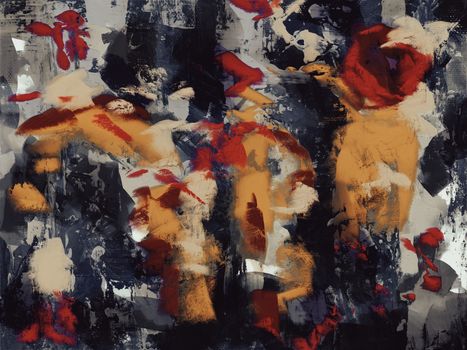
Dynamic abstract expressionist artwork with bold colors and textures. Photo: Steve A Johnson / Pexels
The mid-20th century witnessed a seismic shift in the art world, with America, specifically New York City, emerging as its new epicenter. This era gave birth to Abstract Expressionism, a movement that fundamentally redefined what art could be and how it could be experienced. Following the devastation of World War II, a generation of artists grappled with profound existential questions, seeking new forms of expression that transcended traditional representation. They rejected the European artistic traditions that had dominated for centuries, instead embracing spontaneity, raw emotion, and a deeply personal exploration of the subconscious. This wasn't merely a stylistic change; it was a philosophical declaration, positioning the artist's inner experience and the act of painting itself as paramount. The movement was characterized by large-scale canvases, bold brushstrokes, and a lack of discernible subject matter, inviting viewers to engage with the work on an emotional and intuitive level rather than a purely intellectual one. Before this period, American art was often seen as derivative of European movements. However, with Abstract Expressionism, American artists carved out a distinctly American identity in the global art scene. Figures like Arshile Gorky, who bridged Surrealism and Abstract Expressionism, and Hans Hofmann, a teacher who emphasized the expressive potential of color and form, laid crucial groundwork. Their influence helped nurture a generation of artists who would go on to become household names. The movement wasn't monolithic; it encompassed diverse approaches, broadly categorized into Action Painting and Color Field Painting. Action Painters, epitomized by Jackson Pollock, emphasized the physical act of creation, the gesture, and the energy of the artist. Color Field Painters, such as Mark Rothko and Barnett Newman, focused on the immersive power of large expanses of color to evoke spiritual or contemplative states. This diversity, while sometimes leading to internal debates and rivalries, ultimately enriched the movement and ensured its lasting impact. The sheer scale of many Abstract Expressionist works demanded a new kind of viewer engagement, transforming the gallery space into an immersive environment rather than a mere display area. This transformative period forever altered the trajectory of modern art, establishing a legacy that continues to resonate in contemporary practices and influencing countless artists across disciplines. The freedom and intensity championed by these pioneers opened doors for future explorations into abstraction and conceptual art, cementing their place as true innovators.

Pioneering Figures of Action Painting and Their Legacy
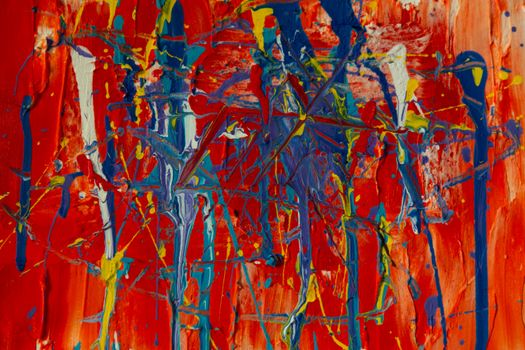
Dynamic abstract painting with bold acrylic colors on canvas. Photo: Steve A Johnson / Pexels
Within the expansive realm of Abstract Expressionism, Action Painting emerged as a particularly dynamic and revolutionary approach. This style, often associated with the 'New York School,' emphasized the physical process of painting, transforming the canvas into an arena for the artist's direct engagement and emotional outpouring. The most iconic figure of Action Painting, and arguably one of the most famous American abstract artists, is Jackson Pollock. His groundbreaking 'drip paintings,' created by laying large canvases on the floor and dripping, pouring, and splashing paint from above, were a radical departure from traditional easel painting. Pollock's technique, which he famously described as being 'in' the painting, not 'on' it, allowed for an unprecedented level of spontaneity and directness. His canvases became intricate webs of overlapping lines and colors, reflecting the artist's movements and internal rhythms. These works weren't just paintings; they were records of an event, a performance, challenging conventional notions of composition and artistic control. Pollock's work, though initially met with both awe and controversy, ultimately cemented his status as a pioneer, opening up new possibilities for artistic expression and influencing generations of artists worldwide. His life and work embody the myth of the tortured genius, further fueling public fascination with the Abstract Expressionist movement. Another pivotal figure in Action Painting was Willem de Kooning. Unlike Pollock's all-over compositions, de Kooning maintained a more traditional, albeit highly abstract, engagement with the figure and landscape. His raw, aggressive brushwork and vibrant, often unsettling, color palettes conveyed a visceral energy. Works like his 'Woman' series, though abstract, still hinted at human forms, demonstrating his struggle between figuration and pure abstraction. De Kooning's process involved constant revision, scraping away and repainting, leaving behind a palimpsest of his artistic journey. His contributions highlighted the expressive potential of the brushstroke itself, making each mark a testament to his emotional and intellectual wrestling with the canvas. Franz Kline, known for his monumental black and white canvases, also contributed significantly to Action Painting. His bold, sweeping brushstrokes, reminiscent of East Asian calligraphy, conveyed immense power and a sense of raw, unbridled energy. These artists, through their distinct yet shared commitment to the expressive gesture, not only pushed the boundaries of painting but also redefined the role of the artist, establishing a legacy of freedom and innovation that continues to inspire. Their works are not just visual spectacles but profound statements on the human condition, rendered through the language of pure form and uninhibited action.

The Meditative Depths of Color Field Painting
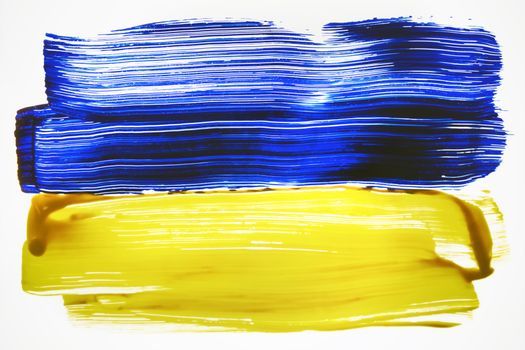
Vibrant abstract art featuring blue and yellow paint strokes on white background. Photo: Tim Mossholder / Pexels
In stark contrast to the dynamic and gestural approach of Action Painting, Color Field Painting offered a different path to abstraction, emphasizing large, unbroken expanses of color to evoke profound emotional and spiritual responses. This branch of Abstract Expressionism sought to immerse the viewer in color itself, often eliminating any discernible brushstrokes or focal points to create a sense of vastness and contemplation. The intention was to strip away all narrative and representation, allowing the pure experience of color to communicate directly with the viewer's psyche. Mark Rothko stands as the quintessential master of Color Field Painting. His iconic works feature soft-edged, rectangular blocks of color, often vibrant and pulsating, hovering one above the other on immense canvases. Rothko's goal was not to create beautiful decorations but to evoke deep human emotions – tragedy, ecstasy, doom. He believed that large-scale works could envelop the viewer, creating an intimate and almost spiritual encounter. The subtle variations in his color fields, the bleeding edges, and the luminosity achieved through layering thin washes of paint, invite prolonged meditation, making his works powerful vehicles for introspection. Another key figure in Color Field Painting was Barnett Newman, who developed his signature 'zip' paintings. These works featured vast, monochromatic fields of color punctuated by thin vertical lines or 'zips' that ran from one edge of the canvas to the other. Newman saw these zips not as mere divisions but as interruptions, creating a sense of tension and drawing the viewer's eye across the expansive field. For Newman, these zips represented the human presence within the sublime, a moment of consciousness within the infinite. His philosophical approach sought to connect art with universal truths and the experience of the sublime. Helen Frankenthaler, a pioneering female artist in the movement, innovated the 'soak-stain' technique. She poured thinned paint directly onto unprimed canvas, allowing the colors to soak in and blend, creating luminous, ethereal forms that seemed to emerge from the canvas itself. Her work brought a lyrical quality to Color Field painting, exploring the fluidity and transparency of color. These artists, through their singular focus on color and form, transformed the perception of abstraction, proving that art could be deeply moving and intellectually stimulating without relying on traditional subject matter. Their legacy continues to influence contemporary abstract art, demonstrating the enduring power of color to communicate the ineffable and create immersive aesthetic experiences. Understanding their contributions is key to appreciating the full spectrum of American abstract art.

Beyond the Canvas: The Enduring Influence and Modern Relevance

Art gallery hallway with framed artworks and visitors seated inside, under warm lighting. Photo: ProtSilver Chen / Pexels
The impact of famous American abstract artists extends far beyond the canvases they painted. Their revolutionary approaches fundamentally altered the course of art history, not only in the United States but globally. The freedom they championed, the emphasis on individual expression, and the belief in art's capacity to communicate profound emotional and spiritual truths resonated deeply with subsequent generations of artists. Abstract Expressionism, particularly, broke down barriers between the artist and the artwork, viewing the creative process itself as a significant component of the final piece. This paved the way for performance art, conceptual art, and a greater emphasis on process over product in later artistic movements. The sheer scale and ambition of their works also influenced how art was exhibited and perceived, demanding larger gallery spaces and encouraging a more immersive viewing experience. **Tips for Appreciating Abstract Art:** * **Let Go of Expectation:** Don't search for recognizable objects or narratives. Approach the work with an open mind. * **Engage Your Emotions:** Allow the colors, forms, and textures to evoke feelings or sensations within you. * **Consider the Context:** A basic understanding of the artist's life and the historical period can enrich your appreciation. * **Step Back and Step In:** View the work from a distance to grasp its overall impact, then move closer to observe details and brushwork. * **Read the Title (Sometimes):** While often abstract, some titles offer clues to the artist's intention or mood. * **Visit in Person:** Reproductions rarely capture the true scale, texture, and luminosity of abstract works. The legacy of these artists is evident in the continued exploration of abstraction in contemporary art, from minimalist sculpture to digital art. Their willingness to challenge conventions and redefine artistic boundaries provided a crucial foundation for the diverse and experimental art world we inhabit today. Museums worldwide proudly display their masterpieces, which continue to captivate and challenge viewers. The debates they sparked about the nature of art, its purpose, and its audience remain relevant, ensuring that their contributions are not just historical footnotes but living, breathing influences on artistic discourse and practice. Their bravery in charting new territory solidified America's place as a global leader in the arts and inspired countless individuals to pursue their own creative paths, irrespective of traditional constraints. This enduring relevance underscores the timeless power and innovation of these iconic abstract pioneers.

Comparison

FeatureJackson PollockMark RothkoHelen Frankenthaler
Primary StyleAction PaintingColor Field PaintingColor Field (Soak-Stain)
TechniqueDripping/PouringLayered WashesSoak-Stain
Emotional ImpactEnergetic, ChaoticMeditative, SpiritualLyrical, Ethereal
ScaleLarge, All-overLarge, ImmersiveLarge, Expansive

What Readers Say

"This article brilliantly captures the essence of famous American abstract artists. I always found Rothko's work moving, but now I understand the historical context and artistic intent much better. A truly enlightening read!"

Sarah Chen · New York, NY

"As an art student, this deep dive into Abstract Expressionism and its pioneers like Pollock and De Kooning is invaluable. The explanations of their techniques and philosophies are incredibly clear and inspiring. Highly recommend!"

David Rodriguez · Los Angeles, CA

"Before reading this, abstract art felt intimidating. Now, I feel a genuine connection to the works of these famous American abstract artists, especially Frankenthaler. My next museum visit will be much more enriching."

Emily White · Chicago, IL

"The article is comprehensive and well-written, offering a great overview of the main figures. While I wish there were a few more female artists highlighted, the information provided is excellent and deeply informative about the movement's core."

Michael Green · Boston, MA

"I've always loved American abstract art, but this piece really deepened my appreciation. Understanding the 'why' behind the 'what' for artists like Newman has transformed my viewing experience. A must-read for any art enthusiast."

Jessica Lee · Austin, TX

Frequently Asked Questions

Who are considered the most famous American abstract artists?

The most famous American abstract artists typically include Jackson Pollock, known for his revolutionary 'drip paintings'; Mark Rothko, celebrated for his deeply emotional color field works; Willem de Kooning, recognized for his vigorous brushwork; and Barnett Newman, with his minimalist 'zip' paintings. Helen Frankenthaler is also a pivotal figure, particularly for her innovative soak-stain technique.

What is Abstract Expressionism and why is it important?

Abstract Expressionism was a post-World War II art movement in American painting, developed in New York City in the 1940s. It was the first specifically American movement to achieve worldwide influence, shifting the center of the art world from Paris to New York. It's important because it emphasized spontaneous, automatic, or subconscious creation, allowing artists to express raw emotion and individual identity through non-representational forms.

How did Jackson Pollock create his 'drip paintings'?

Jackson Pollock created his iconic 'drip paintings' by laying large canvases on the floor of his studio. He then used hardened brushes, sticks, or even basting syringes to drip, pour, and splash paint onto the canvas, often without touching it directly. This technique, known as 'Action Painting,' allowed for a direct physical engagement with the medium and a spontaneous, gestural application of paint.

Is abstract art difficult to understand?

Abstract art can sometimes feel challenging because it often lacks recognizable subjects. However, it's not about 'understanding' in a literal sense, but rather about experiencing. It invites viewers to engage with color, form, texture, and composition on an emotional and intuitive level, rather than seeking a narrative or literal meaning. Approaching it with an open mind and allowing yourself to feel the work can make it highly rewarding.

What is the difference between Action Painting and Color Field Painting?

Both are branches of Abstract Expressionism, but they differ in approach. Action Painting, exemplified by Jackson Pollock and Willem de Kooning, emphasizes the physical act of painting, gestural brushstrokes, and a sense of dynamic energy. Color Field Painting, seen in the works of Mark Rothko and Barnett Newman, focuses on large, flat areas of color to create a more meditative, immersive, and often spiritual experience, minimizing visible brushwork and gesture.

Who should appreciate famous American abstract artists?

Anyone interested in the evolution of modern art, the power of emotional expression through non-representational forms, or the cultural shifts that shaped post-war America will find these artists compelling. Art enthusiasts, students, historians, and individuals seeking to broaden their aesthetic horizons will all benefit from exploring their works and stories.

Did these artists face criticism during their time?

Yes, many famous American abstract artists faced significant criticism and misunderstanding during their early careers. Their radical departure from traditional art forms often bewildered critics and the public. However, as their influence grew and the art world began to embrace modernism, their work gained widespread recognition and acclaim, eventually becoming cornerstones of modern art.

What is the future trend for appreciating abstract art?

The appreciation of abstract art continues to evolve, with increasing recognition of its historical significance and ongoing influence. Future trends may include more immersive digital experiences of abstract works, interdisciplinary studies connecting abstract art with science and philosophy, and a continued focus on the diverse voices and global interpretations within the abstract tradition, ensuring its enduring relevance in a dynamic world.

Immerse yourself in the profound and revolutionary world of famous American abstract artists. Their groundbreaking works and innovative spirits continue to inspire and challenge, offering a timeless journey into the depths of human emotion and artistic freedom. Explore their legacies and let their powerful abstractions redefine your understanding of art.

Topics: famous American abstract artistsabstract expressionismAmerican modern artJackson PollockMark Rothko
Leo List
Brampton weed
Adultwork