Exploring Different Types of Art Styles
July 17, 2026 17 min read 3,444 words
Uncover the rich tapestry of artistic expression and find the styles that resonate with your spirit.
Start Your Artistic Journey
The Foundations: Classical and Traditional Art Styles
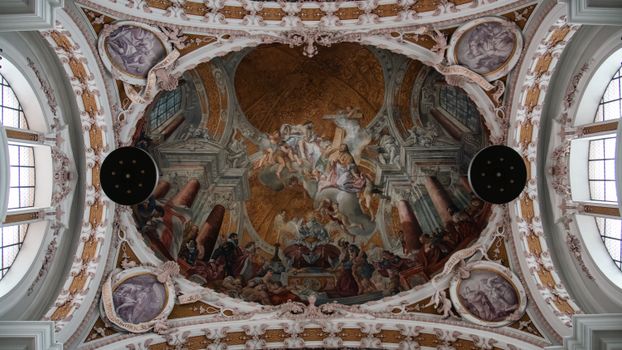 Photo: Fran Zaina / Pexels
To truly appreciate the vast spectrum of different types of art styles, one must first understand the foundational movements that shaped Western art and continue to influence artists today. These classical and traditional styles laid down the rules, which subsequent generations would either adhere to or rebel against, creating a rich dialogue across centuries. From the meticulous detail of the Renaissance to the dramatic flair of the Baroque, these periods represent pivotal moments in art history.
**Renaissance Art (c. 1300s-1600s):** Emerging from Italy, the Renaissance marked a 'rebirth' of classical ideals, focusing on humanism, naturalism, and perspective. Artists like Leonardo da Vinci, Michelangelo, and Raphael perfected techniques such as *sfumato* (soft, subtle transitions between colors and tones) and *chiaroscuro* (strong contrasts between light and dark) to create lifelike figures and compositions. Religious themes were prevalent, but with a newfound emphasis on human emotion and anatomical accuracy. The exploration of linear perspective created an illusion of depth and reality never before seen, drawing the viewer into the painted scene. Sculptures from this era, exemplified by Michelangelo's 'David,' showcase an idealized human form, embodying strength, beauty, and intellectual prowess. The art of the Renaissance was often commissioned by wealthy patrons and the Church, reflecting the societal values of the time – a blend of spiritual devotion and burgeoning scientific inquiry. This period's influence on Western art is immeasurable, setting standards for beauty, proportion, and narrative storytelling that would last for centuries. It was a time when art transcended mere decoration to become a profound exploration of humanity and the divine.
Learn more about the artistic techniques of the Renaissance.
**Baroque Art (c. 1600s-1750s):** Following the Renaissance, Baroque art swept across Europe, characterized by its grandeur, drama, and emotional intensity. This style was a direct response to the Protestant Reformation, with the Catholic Church utilizing art to reaffirm its power and splendor. Artists such as Caravaggio, Gian Lorenzo Bernini, and Peter Paul Rubens employed dynamic compositions, rich colors, and exaggerated forms to evoke awe and passion. The use of intense chiaroscuro, often called *tenebrism*, created stark contrasts that heightened the dramatic effect, pulling viewers into the emotional core of the work. Baroque architecture, with its ornate decoration and elaborate facades, mirrored the theatricality found in painting and sculpture. Think of Bernini's 'Ecstasy of Saint Teresa,' a sculpture that practically vibrates with spiritual fervor. This period was about movement, opulence, and an almost overwhelming sensory experience designed to inspire devotion and wonder. It moved away from the calm rationality of the Renaissance towards a more emotive and dynamic portrayal of the human experience and religious narratives. The sheer scale and ambition of Baroque works were often breathtaking, intended to impress and inspire devotion among the masses. This era truly demonstrated the power of art as a tool for persuasion and spectacle.
**Rococo Art (c. 1730s-1780s):** A lighter, more playful evolution from the Baroque, Rococo emerged in France, catering to the aristocracy's desire for elegance and frivolity. This style emphasized delicate ornamentation, pastel colors, asymmetrical designs, and themes of love, nature, and leisurely pursuits. Artists like Jean-Honoré Fragonard and Antoine Watteau created dreamy, idyllic scenes, often featuring cupid, mythological figures, and romantic encounters in lush gardens. The brushwork was often softer, with a shimmering quality, and the compositions were less rigid than their Baroque predecessors. Rococo interiors were characterized by intricate stucco work, gilded mirrors, and sumptuous fabrics, creating an atmosphere of refined luxury. It was an art of extravagance and charm, perfectly suited to the salons and private residences of the wealthy elite. While sometimes criticized for its perceived superficiality, Rococo art undeniably mastered a sense of grace and intimate beauty, capturing the spirit of an age focused on pleasure and sophisticated leisure. It represents a significant shift in artistic focus, moving from grand public statements to more personal and decorative expressions of art.
The Modern Era: Revolutionizing Artistic Expression
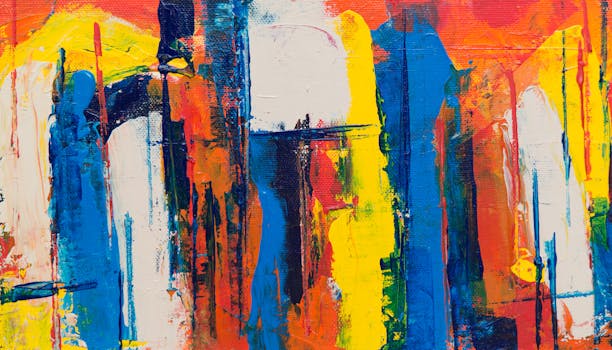 Photo: Steve A Johnson / Pexels
The 19th and 20th centuries witnessed an unprecedented explosion of different types of art styles, as artists increasingly challenged traditional norms and sought new ways to represent the rapidly changing world. This period, often termed 'Modern Art,' saw a radical departure from strict realism towards abstraction, symbolism, and a deeper exploration of subjective experience. Each movement built upon or reacted against its predecessors, leading to a dynamic and often controversial evolution of artistic thought.
**Impressionism (c. 1860s-1880s):** Originating in France, Impressionism sought to capture the fleeting 'impression' of a moment, focusing on light, color, and atmosphere rather than precise detail. Artists like Claude Monet, Pierre-Auguste Renoir, and Edgar Degas used loose brushwork, vibrant palettes, and often painted *en plein air* (outdoors) to directly observe and record the effects of natural light. Their subjects were often landscapes, cityscapes, and scenes of everyday life, reflecting a shift from historical or mythological narratives. The movement's name itself came from a critical review of Monet's 'Impression, Sunrise,' initially intended as an insult but later embraced by the artists. Impressionism revolutionized how light and color were perceived and rendered, breaking away from academic conventions and paving the way for further experimentation in art.
**Cubism (c. 1907-1914):** Pioneered by Pablo Picasso and Georges Braque, Cubism was one of the most influential and radical art styles of the 20th century. It shattered traditional notions of perspective and representation by depicting subjects from multiple viewpoints simultaneously, breaking them down into geometric forms. This analytical approach challenged the viewer to reconstruct the image mentally, offering a revolutionary way of seeing. Early Cubism (Analytical Cubism) used muted colors and focused on form, while later Cubism (Synthetic Cubism) introduced collage elements, bolder colors, and simplified shapes. Cubism wasn't just a style; it was a new philosophy of art, influencing sculpture, architecture, and even literature, demonstrating how art could dissect and reassemble reality in profound ways.
**Surrealism (c. 1920s-1960s):** Developed from Dadaism, Surrealism aimed to unleash the creative potential of the unconscious mind, inspired by Sigmund Freud's theories of psychoanalysis. Artists like Salvador Dalí, René Magritte, and Joan Miró created dreamlike, often bizarre, and illogical scenes, juxtaposing ordinary objects in extraordinary ways. Techniques included automatic drawing and painting, allowing the subconscious to guide the hand. Surrealism sought to explore the irrational, the dream, and the hidden desires, challenging societal norms and rational thought. It was a movement deeply intertwined with literature and political activism, aiming to liberate humanity from the constraints of logic and reason through the power of imagination. The impact of Surrealism extended far beyond painting, influencing film, fashion, and advertising, proving the profound allure of the subconscious in art.
**Abstract Expressionism (c. 1940s-1950s):** This post-World War II American movement marked a significant shift in the art world's center from Paris to New York. Abstract Expressionism emphasized spontaneous, energetic, and non-representational forms, often on large canvases. Artists like Jackson Pollock (known for his drip paintings) and Mark Rothko (famous for his color field paintings) focused on the emotional and psychological expression of the artist, rather than depicting objective reality. It was about the act of painting itself, the artist's gesture, and the raw emotion conveyed through color and form. This style often evoked intense emotional responses, inviting viewers to engage with the work on a deeply personal and visceral level. Abstract Expressionism was a powerful statement of individual freedom and a profound exploration of the human psyche in the wake of global conflict, solidifying America's place on the global art stage.
Contemporary Currents: Diverse Types of Art Styles Today
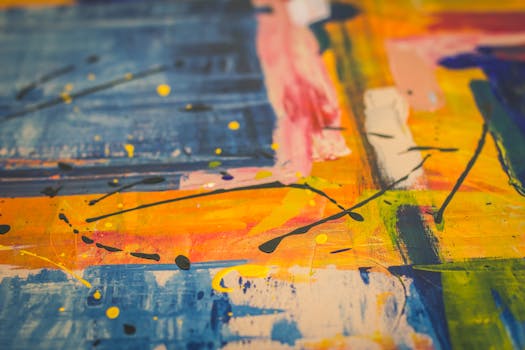 Photo: Steve A Johnson / Pexels
The contemporary art landscape is a vibrant and often bewildering mosaic of different types of art styles, constantly evolving and challenging definitions. It's a period characterized by pluralism, where artists freely borrow from history, embrace new technologies, and push the boundaries of what constitutes 'art.' There's no single dominant style, but rather a multitude of approaches reflecting the complexities of our globalized and digital world. Understanding these contemporary currents requires an open mind and a willingness to engage with diverse perspectives.
**Pop Art (c. 1950s-1970s):** Emerging in the mid-20th century, Pop Art was a reaction against Abstract Expressionism's perceived elitism and seriousness. It drew inspiration from popular culture, advertising, comic books, and everyday mass-produced objects. Artists like Andy Warhol, Roy Lichtenstein, and Keith Haring celebrated consumerism and celebrity culture, often using bold colors, repetitive imagery, and commercial printing techniques. Pop Art blurred the lines between 'high art' and 'low culture,' making art accessible and relatable to a wider audience. It was playful, ironic, and often critical of society's obsession with material goods, yet it also reveled in the visual language of the commercial world. Its lasting legacy is evident in its continued influence on graphic design, fashion, and popular media, proving that art can be both profound and profoundly popular.
Explore the impact of Pop Art on commercial design.
**Minimalism (c. 1960s-1970s):** As a counterpoint to the expressive and often chaotic nature of Abstract Expressionism and the commercialism of Pop Art, Minimalism sought purity and simplicity. Artists like Donald Judd, Dan Flavin, and Carl Andre reduced art to its essential elements, often using industrial materials and geometric forms. The focus was on the object itself, its physical presence, and the viewer's interaction with the space it occupied. Minimalist works often lacked narrative, symbolism, or personal expression, instead inviting contemplation on form, material, and spatial relationships. It was a radical questioning of what art could be, stripping away extraneous details to reveal the fundamental qualities of an object or experience. This movement encouraged viewers to engage with art on a purely aesthetic and intellectual level, challenging them to find meaning in simplicity and structure.
**Conceptual Art (c. 1960s-present):** In Conceptual Art, the idea or concept behind the artwork takes precedence over the finished product or aesthetic appeal. The 'art' lies in the thought process, the proposal, or the documentation, rather than in a traditional painting or sculpture. Artists like Sol LeWitt, Joseph Kosuth, and Marina Abramović used various mediums, from text and photography to performance and installation, to explore philosophical questions, societal structures, and the nature of art itself. Conceptual art often requires intellectual engagement from the viewer, prompting them to think critically about the underlying ideas rather than simply observing a beautiful object. It pushed the boundaries of art, questioning its very definition and challenging the commodification of art objects. This movement opened up countless possibilities for artistic expression, emphasizing intellectual rigor and critical inquiry over traditional craftsmanship.
**Street Art / Graffiti (c. 1970s-present):** Evolving from urban graffiti, Street Art encompasses diverse forms of public art created in public spaces, often without official permission. Artists like Banksy, Shepard Fairey, and Jean-Michel Basquiat (who began as a graffiti artist) use murals, stencils, stickers, and installations to make social and political statements, beautify neglected areas, or simply express themselves. This style is inherently democratic, bringing art directly to the people and often addressing contemporary issues with immediacy and wit. Street Art challenges the traditional gallery system, blurring the lines between vandalism and legitimate artistic expression. It is characterized by its raw energy, diverse techniques, and often ephemeral nature, reflecting the ever-changing urban environment and the pulse of contemporary culture. Its global reach and widespread appeal have made it one of the most recognizable and influential art movements of recent decades.
Navigating the Art World: Tips for Appreciation and Avoiding Misconceptions
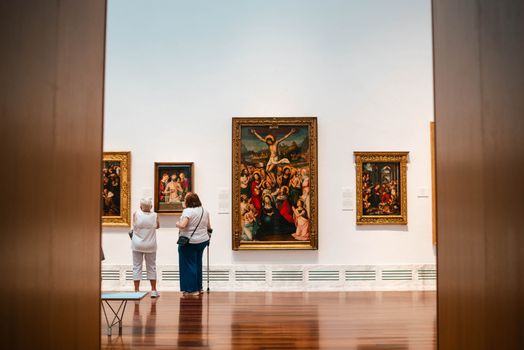 Photo: Patryk Balcerzak / Pexels
Understanding the different types of art styles is not just about memorizing names and dates; it's about developing a deeper appreciation for human creativity and the myriad ways artists communicate. However, the vastness of the art world can sometimes feel overwhelming, and it's easy to fall into common pitfalls. Here are some tips to enhance your art appreciation journey and avoid common misconceptions:
**Tips for Deeper Art Appreciation:**
* **Visit Museums and Galleries Regularly:** There's no substitute for experiencing art firsthand. Pay attention to scale, texture, and the nuances of color that digital images often miss. Many museums offer free days or student discounts.
* **Read Exhibition Labels and Catalogs:** These provide crucial context about the artist, the artwork's historical background, and the techniques used. Don't be afraid to read critiques or scholarly articles.
* **Engage with the Artwork:** Don't just glance. Spend time in front of a piece. What emotions does it evoke? What questions does it raise? How does it make you feel physically? Allow yourself to have a personal reaction.
* **Research the Artist's Intent:** Understanding an artist's philosophy, life experiences, and the historical period they lived in can unlock deeper meanings in their work. What were they trying to say or achieve?
* **Experiment with Different Mediums:** Try your hand at drawing, painting, or sculpting. This hands-on experience can provide invaluable insight into the challenges and decisions artists face.
* **Discuss Art with Others:** Share your observations and interpretations with friends, family, or fellow art enthusiasts. Different perspectives can open up new avenues of understanding.
* **Explore Beyond Western Art:** The world is rich with diverse artistic traditions. Delve into African, Asian, Indigenous, and other global art forms to broaden your perspective and appreciation.
**Common Misconceptions to Avoid:**
* **"My child could do that!"**: This often-heard phrase, especially for abstract or minimalist art, dismisses the years of training, conceptual thought, and intentionality behind the work. While a child might produce something superficially similar, the underlying artistic process, context, and message are vastly different.
* **"Art has to be beautiful to be good."**: Not all art aims for traditional beauty. Many artists create works that are challenging, disturbing, or thought-provoking to convey powerful messages, challenge norms, or reflect difficult realities. Art can be effective without being aesthetically pleasing in a conventional sense.
* **"I don't 'get' modern art."**: Modern and contemporary art often require intellectual engagement and a willingness to understand the artist's conceptual framework. It's less about a literal interpretation and more about an experience or an idea. Don't be afraid to ask questions or seek explanations.
* **"There's a single 'right' interpretation."**: While artists may have intentions, viewers bring their own experiences and perspectives to an artwork. Personal interpretation is a valid and crucial part of the art experience, though it's helpful to be informed by context.
* **"Art is only for the elite."**: Art, in its myriad forms, is for everyone. Public art, street art, and community art initiatives demonstrate that artistic expression is deeply ingrained in human culture across all socioeconomic strata. Don't let perceived barriers prevent you from engaging with it.
By embracing these tips and dispelling these common myths, you can embark on a more enriching and fulfilling journey through the incredible world of art styles.
