Unveiling the Different Types of Sculpture Art
August 11, 2026 15 min read 2,934 words
Journey through the captivating world of three-dimensional art, from classical carving to cutting-edge digital forms.
Start Exploring
Traditional Sculpture Techniques: Carving, Modeling, and Casting
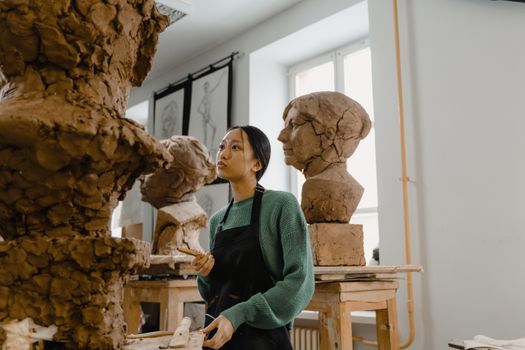 Photo: Tima Miroshnichenko / Pexels
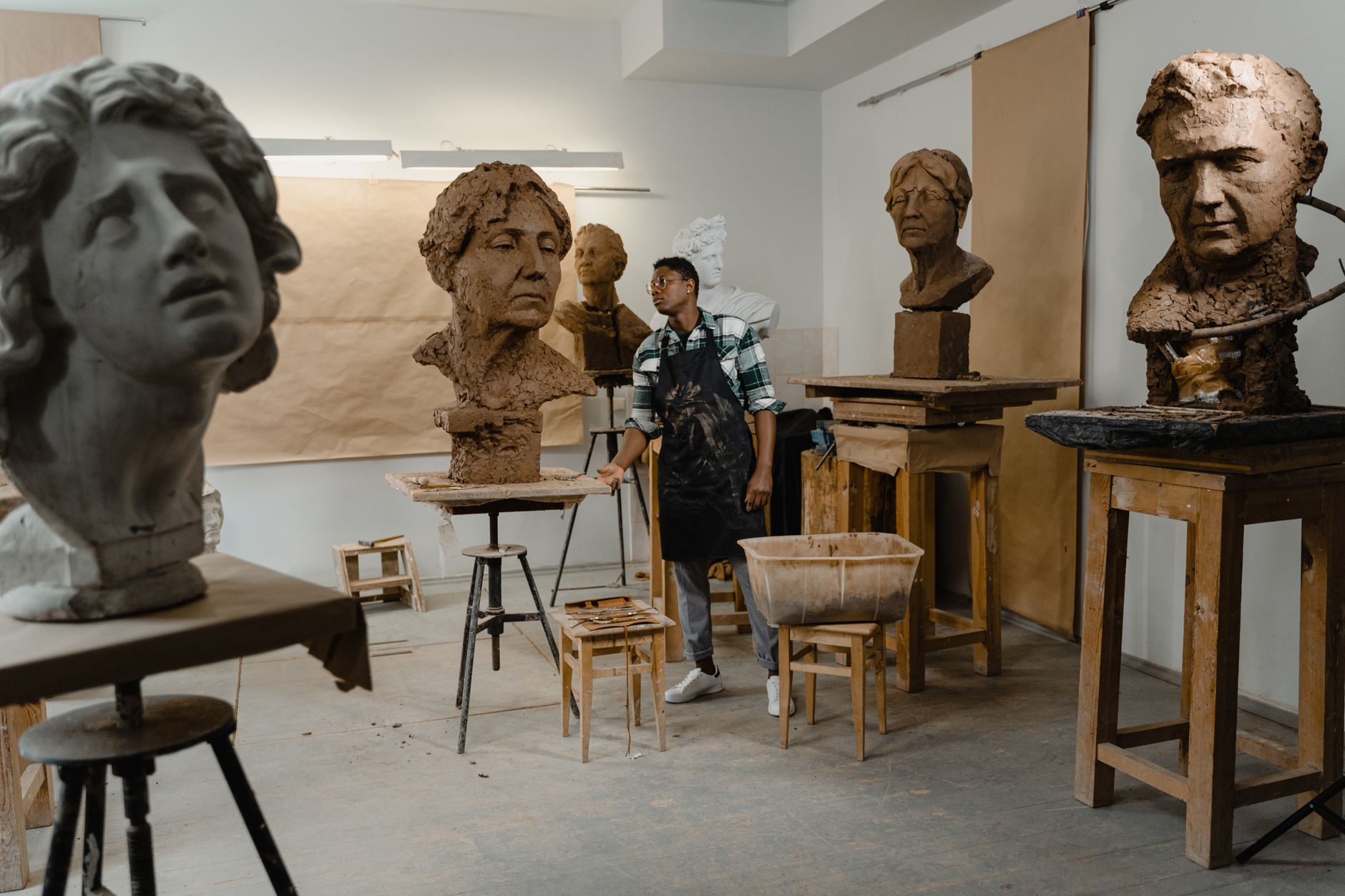
Sculpture, a three-dimensional art form, boasts a rich history spanning millennia, with its foundational techniques remaining relevant even today. Understanding these traditional methods is crucial for appreciating the evolution of this captivating art. Among the oldest and most direct approaches is **carving**, a subtractive process where material is removed from a larger block to reveal the desired form. This method demands immense precision, foresight, and a deep understanding of the chosen medium's properties. Stone carving, for instance, requires specialized chisels, hammers, and rasps to chip away at granite, marble, or limestone, revealing intricate details or monumental figures. Wood carving, on the other hand, utilizes gouges and knives, often taking advantage of the natural grain to add texture and movement. The challenges of carving lie in its irreversibility; once material is removed, it cannot be easily reattached. This necessitates a careful, methodical approach, where every cut is intentional and contributes to the final vision. Master carvers possess an innate ability to 'see' the finished sculpture within the raw material, guiding their hands with unparalleled skill.
The history of these techniques is intertwined with human civilization, from ancient Egyptian statues to Renaissance masterpieces.
**Modeling** stands in stark contrast to carving as an additive process. Here, soft, pliable materials like clay, wax, or even plaster are built up, shaped, and manipulated by hand or with simple tools. This method offers greater flexibility and allows for spontaneous adjustments, making it a favorite for preparatory sketches and studies, as well as finished works. Clay is particularly versatile, allowing for intricate details, expressive gestures, and the creation of hollow forms. The modeled piece can then be fired in a kiln to become terracotta or bronze, or it can serve as a master mold for casting. The tactile nature of modeling fosters a direct connection between the artist and the material, allowing for a more fluid and intuitive creative process.
**Casting** is a transformative technique that allows for the reproduction of a sculpture, often in a more durable material than the original model. The most common form is bronze casting, a process that involves creating a mold from an original sculpture (often modeled in clay or wax). The lost-wax method, or cire perdue, is a particularly ancient and intricate casting technique. It begins with a wax model, which is then encased in a refractory material to create a mold. The wax is subsequently melted out, leaving a hollow cavity into which molten metal, typically bronze, is poured. Once cooled, the mold is broken away, revealing the metal sculpture. This method allows for exceptional detail and the creation of complex forms that would be difficult or impossible to achieve through carving or direct modeling. Casting has been pivotal in creating public monuments, decorative arts, and enabling artists to produce multiple editions of their work, broadening accessibility and preserving artistic legacies across generations. The precision and technical expertise required for successful casting underscore its status as a sophisticated art form in itself.
Modern and Contemporary Sculpture: Assemblage, Installation, and Kinetic Art
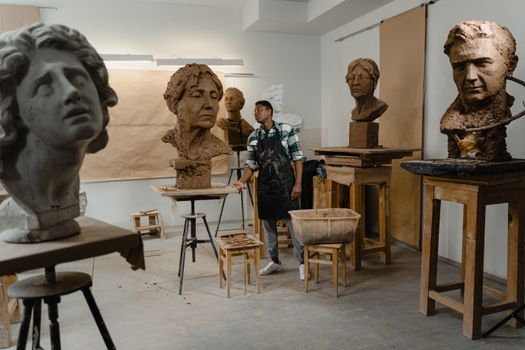 Photo: Tima Miroshnichenko / Pexels
As the art world evolved through the 20th and 21st centuries, so too did the methodologies and philosophical underpinnings of sculpture. Breaking away from classical traditions, modern and contemporary sculptors embraced new materials, concepts, and modes of presentation, giving rise to fascinating new categories. **Assemblage** emerged as a significant departure, moving beyond the singular block or pliable mass to incorporate disparate, often everyday, objects into a unified three-dimensional composition. Artists like Pablo Picasso and Marcel Duchamp pioneered this approach, transforming found objects – from bicycle wheels to bottle racks – into provocative artworks. Assemblage celebrates the inherent qualities of existing objects, recontextualizing them and inviting viewers to reconsider their meaning. This method challenges traditional notions of artistic skill, emphasizing instead the artist's eye for selection, arrangement, and conceptual vision. The beauty of assemblage lies in its democratic nature; almost anything can become a component, leading to an endless array of textures, narratives, and social commentaries. It blurs the lines between art and life, often reflecting the consumerist nature of modern society or critiquing industrial production.
**Installation art** represents another revolutionary shift, transforming entire spaces into immersive sculptural experiences. Unlike a traditional sculpture that occupies a specific point in space, an installation engages with its environment, often requiring the viewer to physically enter and interact with the artwork. These ephemeral creations can be site-specific, designed for a particular location, or presented in galleries and museums, radically altering the viewer's perception of the space. Materials for installation art are virtually limitless, ranging from light and sound to organic matter, video projections, and manufactured goods. The emphasis shifts from the individual object to the overall experience, fostering a dialogue between the art, the space, and the audience. Artists like Yayoi Kusama, with her mirrored rooms, or Olafur Eliasson, with his monumental weather installations, exemplify the transformative power of this genre, creating sensory environments that challenge conventional viewing practices and evoke powerful emotional responses. Installation art often addresses themes of perception, memory, social issues, and environmental concerns, making it a highly relevant and impactful contemporary art form.
**Kinetic art**, as its name suggests, incorporates movement as an essential element of the sculpture. While some classical sculptures imply movement, kinetic art literally moves, whether through natural forces like wind, mechanical means, or even electromagnetic energy. This dynamic quality adds a fourth dimension – time – to the sculptural experience, creating ever-changing forms and interactions. Alexander Calder's iconic mobiles, which gracefully sway and shift with air currents, are perhaps the most famous examples of kinetic sculpture. Other artists have explored complex mechanical systems, intricate gears, or even water to create rhythmic, unpredictable, or interactive movements. Kinetic art often plays with balance, gravity, light, and shadow, generating mesmerizing visual effects and engaging the viewer in a unique way. It can be playful and whimsical, or explore deeper scientific and philosophical concepts related to motion, time, and the universe. The integration of movement adds a layer of vitality and unpredictability, making each viewing a unique experience and further expanding the definition of what sculpture can be.
Digital and Light Sculpture: Blending Technology with Artistic Vision
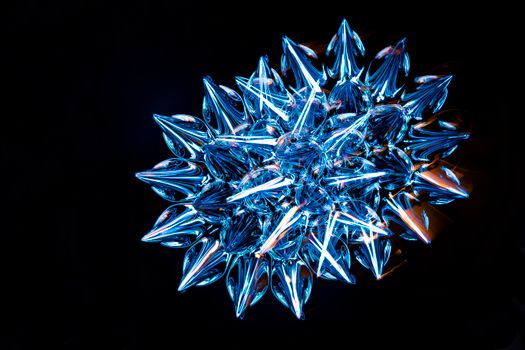 Photo: Merlin Lightpainting / Pexels
The 21st century has ushered in an era where technology is not just a tool but an integral medium for artistic expression, particularly in sculpture. **Digital sculpture** refers to works created using computer software and often realized through advanced manufacturing techniques like 3D printing or CNC machining. Artists can design complex forms in virtual space, manipulating digital clay or geometric primitives with unprecedented precision and freedom. This allows for the creation of intricate, mathematically generated structures, organic shapes that defy traditional fabrication, and even impossible geometries. The digital realm liberates artists from the physical constraints of gravity, material strength, and manual dexterity, opening up a universe of possibilities. Once designed, these digital models can be brought into the physical world through 3D printing, layer by layer, in materials ranging from plastics and resins to metals and ceramics. This fusion of digital design and physical realization has revolutionized prototyping and production, making highly customized and complex sculptural forms more accessible. Beyond physical objects, digital sculpture also encompasses purely virtual experiences, such as augmented reality (AR) or virtual reality (VR) installations where sculptures exist only in a digital space, interacting with the viewer's perceived reality. This pushes the boundaries of presence and materiality, inviting new discussions about the nature of art itself.
The impact of digital tools on artistic creation continues to grow, offering artists new frontiers for exploration.
**Light sculpture**, while not entirely new (think stained glass or projected images), has seen a profound resurgence and transformation with the advent of LED technology, lasers, and sophisticated control systems. These sculptures utilize light as their primary medium, shaping space, creating ephemeral forms, and influencing atmosphere. Artists might use illuminated tubes, projections, or strategically placed light sources to define volume, draw lines in space, or create dynamic, color-changing compositions. Light sculptures can be interactive, responding to sound, movement, or even environmental data, transforming static environments into vibrant, responsive spaces. The absence of physical mass in pure light sculpture challenges our conventional understanding of three-dimensionality, as the 'form' is created by photons rather than solid matter. This ephemeral quality can be deeply meditative or exhilarating, altering perception and evoking powerful emotions. Artists like James Turrell, known for his explorations of light and space, or Dan Flavin, with his minimalist fluorescent light installations, have redefined how we experience and interact with light as an artistic medium. The integration of light into sculptural practice allows for works that are both visually stunning and conceptually profound, commenting on vision, illusion, and the intangible aspects of existence. Both digital and light sculpture exemplify the ongoing innovation in the arts, demonstrating how artists continually adapt and integrate new technologies to expand the expressive potential of the sculptural form.
Exploring the Nuances: Public Art, Environmental Sculpture, and Reliefs
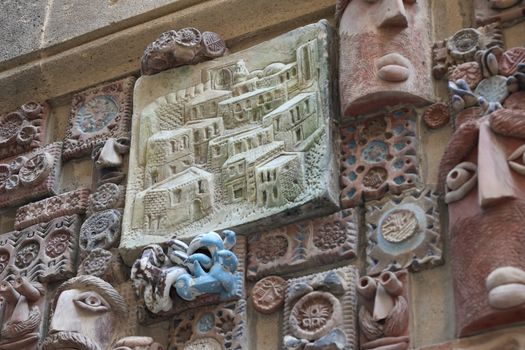 Photo: Tahir Xəlfəquliyev / Pexels
Beyond the primary categories of technique and material, sculpture also differentiates itself through its context, scale, and relationship to its surroundings. **Public art**, for instance, refers to sculptures designed for and placed in public spaces, accessible to everyone. These works often serve multiple purposes: beautifying urban environments, commemorating historical events or figures, stimulating public discourse, or simply providing a focal point for community gathering. From monumental bronze statues in city squares to abstract forms in parklands, public art is intended to be integrated into the fabric of daily life. Its success often hinges on its ability to resonate with the local community, withstand the elements, and engage passersby. The creation of public art involves unique challenges, including funding, site-specific considerations, community input, and long-term maintenance. Artists creating public works must consider not only aesthetics but also durability, safety, and the potential for public interaction, making it a complex and rewarding genre of sculpture. These works often become landmarks, defining the identity of a city or neighborhood.
**Environmental sculpture**, also known as land art or earth art, takes a radical approach by using the natural landscape itself as both the medium and the setting for the artwork. Instead of placing a sculpture *in* nature, the artist works *with* nature, often on a monumental scale, to create forms that interact directly with the environment. This can involve moving earth, arranging natural materials like rocks and branches, or creating structures that subtly alter a landscape. Works like Robert Smithson's 'Spiral Jetty' in Utah or Christo and Jeanne-Claude's wrapped islands exemplify this genre, often existing in remote locations and subject to the forces of weather and time. Environmental sculpture highlights our relationship with nature, often raising ecological awareness and challenging the traditional gallery setting. These works are frequently ephemeral, changing with the seasons or gradually eroding, emphasizing the transient nature of both art and the natural world. They invite contemplation on human intervention in nature and the vastness of geological time.
Finally, **relief sculpture** occupies a fascinating space between painting and freestanding sculpture. Unlike a full three-dimensional sculpture that can be viewed from all sides, a relief sculpture projects from a flat background. The degree of projection determines its classification: **bas-relief** (low relief) projects only slightly, like a coin or ancient Egyptian carvings, offering a subtle play of light and shadow. **Alto-relief** (high relief) projects significantly, with forms often almost detaching from the background, as seen in many classical Greek and Roman friezes. There's also **mezzo-relief** (mid-relief) and **sunk relief**, where the carving is recessed below the surface. Relief sculpture is inherently narrative, often used to decorate architectural structures, tell stories, or depict scenes. It combines the visual storytelling of painting with the tactile qualities of sculpture, creating a unique visual experience that relies on perspective and depth within a limited field. From the Parthenon friezes to modern architectural embellishments, relief sculpture continues to be a powerful form of artistic expression, bridging the gap between two and three dimensions and demonstrating the versatility of sculptural art.