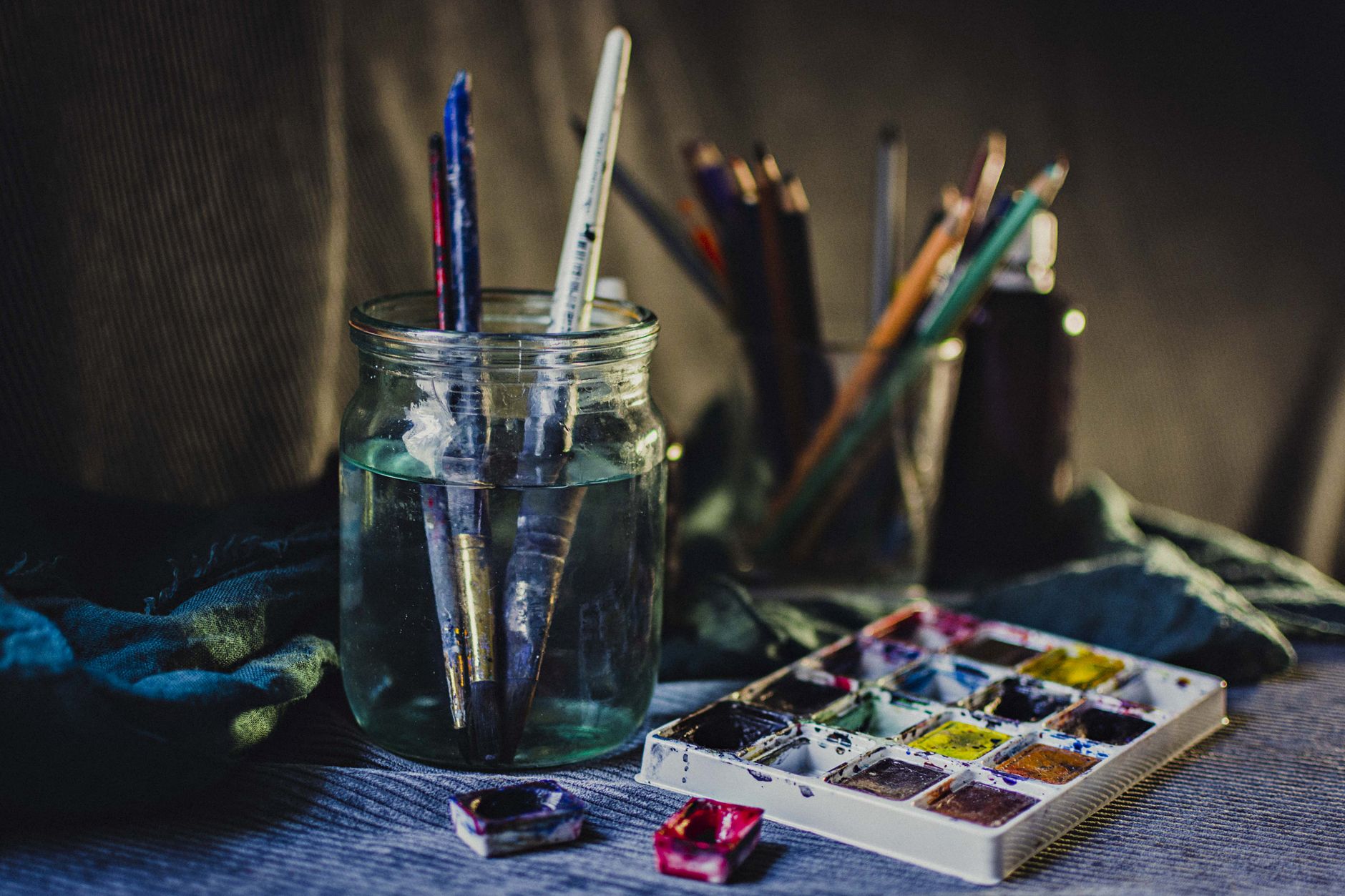
The Best Watercolor Paint Sets for Every Artist
Unlock your artistic potential with our top recommendations for watercolor paint sets, perfect for any skill level.
Find Your Perfect SetKey Takeaways
- ✓ Artist-grade watercolors offer superior lightfastness and pigment load compared to student-grade.
- ✓ Pan sets are convenient for travel and sketching; tube paints are better for large washes and intense color.
- ✓ The binder (usually gum arabic) affects how the paint flows and dries.
- ✓ Lightfastness ratings (ASTM) indicate how resistant a pigment is to fading over time.
- ✓ A good basic set for beginners should include primary colors, a warm and cool of each, and earth tones.
How It Works
Are you a beginner, student, or professional? Your experience dictates the type and quality of set you need to achieve your goals.
Watercolor sets range widely in price. Determine how much you're willing to invest, balancing quality with affordability.
Decide between pan sets (solid cakes) for portability and tube paints (liquid) for intense color and large applications. Both have unique benefits.
Look for sets with high pigment concentration and good lightfastness ratings (ASTM) to ensure vibrant, long-lasting artwork.
Understanding Watercolor Paint Grades: Student vs. Artist Quality
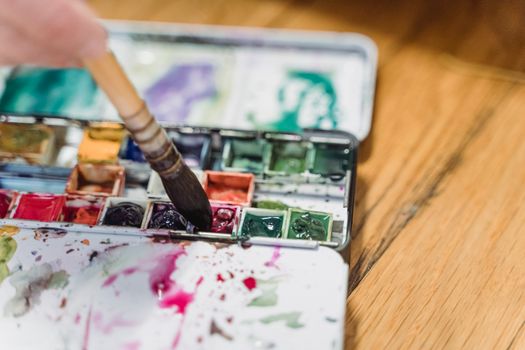 Photo: Greta Hoffman / Pexels
Artist-grade watercolors, on the other hand, boast a significantly higher pigment concentration, resulting in richer, more vibrant colors that go further with less paint. They are formulated with the finest pigments available, often single-pigment, which allows for cleaner color mixing and reduces the risk of muddy results. Crucially, artist-grade paints typically have excellent lightfastness ratings, ensuring your artwork will retain its brilliance for decades. While the initial investment is higher, the quality, intensity, and permanence often make them more cost-effective in the long run, as you use less paint to achieve desired effects. They also rewet more easily and offer a broader range of nuanced colors. Understanding this distinction is vital for making an informed decision about your watercolor journey, ensuring your tools align with your artistic aspirations. For further exploration into art materials, consider visiting our guide on essential art supplies for beginners.
Pan vs. Tube Watercolors: Which Format is Right for You?
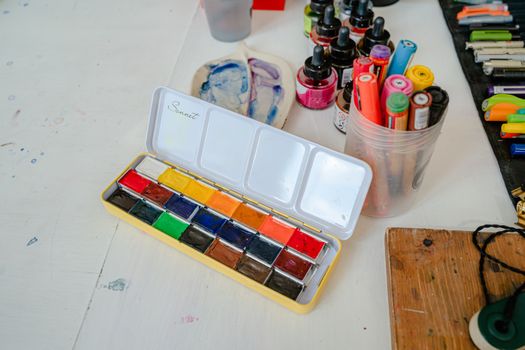 Photo: AI25.Studio Studio / Pexels
Tube watercolors, conversely, offer a highly concentrated, liquid form of paint directly from the tube. This format is preferred for artists working on larger pieces, requiring bold, intense colors, or needing to lay down broad, even washes quickly. The high pigment load in tubes means you can achieve deep saturation with minimal effort, and they are perfect for mixing larger quantities of a specific color without constantly re-wetting pans. Many artists squeeze tube paints into empty pans or ceramic palettes to dry, then rewet them like traditional pans, gaining the benefits of both formats. The primary drawback of tube paints is their portability; carrying multiple tubes can be bulkier, and they can be messier if not managed carefully. Ultimately, the best watercolor paint sets often feature a combination of both or cater specifically to one format based on an artist's preferred style and environment. If you're unsure, starting with a pan set is often recommended for beginners due to its ease of use and portability, while more advanced artists might lean towards tubes for their versatility and intensity.
Key Features to Look For in High-Quality Watercolor Sets
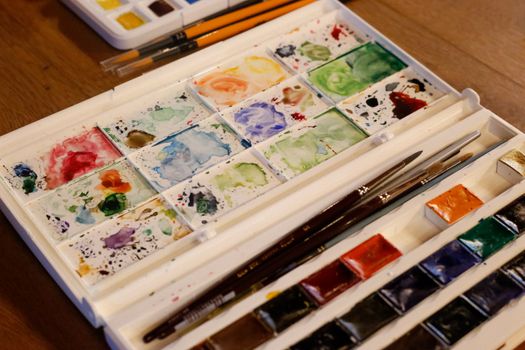 Photo: betül nur akyürek / Pexels
First, consider the pigment selection. A good set, especially for beginners, should include a balanced range of primary colors (red, yellow, blue), often with a warm and cool variant of each, along with some essential secondary colors and earth tones like Burnt Sienna or Raw Umber. This range allows for extensive color mixing, teaching you the fundamentals of color theory. For advanced artists, sets with unique or single-pigment colors can expand creative possibilities.
Next, lightfastness is paramount, particularly if you intend for your artwork to last. Look for ASTM ratings (American Society for Testing and Materials) on the packaging. Ratings like 'I' (Excellent) and 'II' (Very Good) indicate superior resistance to fading. Avoid paints with 'III' (Fair) if longevity is a concern.
The binder, typically gum arabic, plays a crucial role in how the paint flows, dries, and adheres to the paper. High-quality binders ensure smooth application, good transparency, and prevent cracking. Some manufacturers also include additives to improve rewetting or flow, which can be beneficial.
Finally, pay attention to the palette or casing itself. Is it durable? Does it offer sufficient mixing wells? For pan sets, do the pans stay securely in place? A well-designed case can significantly improve your painting experience, especially when working on the go. Some sets include a small brush, which can be convenient for beginners, though often a separate, higher-quality brush is recommended. By evaluating these features, you can confidently choose a watercolor set that meets your specific needs and artistic ambitions, ensuring a satisfying and productive creative process. For more insights on choosing the right tools, check out our guide on understanding different paint mediums.
Tips for Choosing and Using Your New Watercolor Set
Photo: betül nur akyürek / Pexels
- Start with a Limited Palette: While tempting to buy a huge set, begin with 6-12 high-quality colors. This forces you to learn color mixing, a fundamental skill in watercolor. You'll understand how to create a vast spectrum from a few key pigments.
- Always Swatch Your Colors: Before diving into a masterpiece, create a color swatch chart of all the colors in your new set. This helps you understand their true hue, transparency, and how they look on your chosen paper. Note down the color names and lightfastness ratings.
- Invest in Good Paper: Even the best watercolors will struggle on poor-quality paper. Opt for cold-press, 140lb (300gsm) watercolor paper with a high cotton content for optimal water absorption and pigment retention.
- Keep Your Water Clean: Have at least two water containers: one for rinsing off excess paint and another for clean water to dilute colors. This prevents muddy mixes.
- Experiment with Water-to-Paint Ratios: Watercolor is all about transparency and layering. Practice different ratios of water to paint to achieve light washes, vibrant glazes, and opaque details.
- Don't Fear Mistakes: Watercolor can be unforgiving, but every 'mistake' is a learning opportunity. Embrace the medium's unpredictable nature and learn to work with its flow rather than against it.
- Store Properly: Keep your pan sets dry and clean after use to prevent mold. Store tube paints upright in a cool, dry place to prevent leakage or drying out.
Comparison
| Feature | Sennelier La Petite Aquarelle | Winsor & Newton Professional | Schmincke Horadam Aquarell |
|---|---|---|---|
| Target User | Beginner/Student/Travel | Professional/Advanced | Professional/Advanced |
| Grade | Student/Fine Art | Artist | Artist |
| Format | Half Pans | Tubes/Pans | Tubes/Pans |
| Pigment Load | Good | Excellent | Excellent |
| Lightfastness | Good to Very Good | Excellent | Excellent |
| Rewetting | Very Good | Excellent | Excellent |
| Price Point | Budget-Friendly | Premium | Premium |
What Readers Say
"I recently purchased the Winsor & Newton Professional set, and the difference in vibrancy and blendability from my old student paints is astounding. The colors layer beautifully without getting muddy, and a little goes a long way. Truly a joy to paint with!"
Sarah J. · Austin, TX"As a beginner, I was overwhelmed by choices, but the Sennelier La Petite Aquarelle set was perfect. The colors are bright, it's super portable for sketching outdoors, and I feel like I'm getting great quality without breaking the bank."
Mark D. · Seattle, WA"My art pieces now have a professional sheen thanks to the Schmincke Horadam set. The granulating colors are simply breathtaking, and the lightfastness gives me confidence that my work will endure. My gallery sales have definitely seen an uptick."
Elena R. · New York, NY"The Daniel Smith Essentials set is fantastic for its unique pigment properties and rewetting ability. My only minor gripe is the limited palette, but it pushes me to mix more, which is a good challenge for my artistic growth."
David P. · Denver, CO"I travel frequently and needed a compact, high-quality set. The Kuretake Gansai Tambi, while traditionally Japanese, offers incredible opacity and brilliant colors for my travel journals. It's not a typical Western watercolor, but it's absolutely one of the best for my specific needs."
Jessica L. · Miami, FLFrequently Asked Questions
What's the absolute best watercolor paint set for a complete beginner?
For a complete beginner, we recommend a student-grade set like the Sennelier La Petite Aquarelle or a Cotman by Winsor & Newton. These sets offer a good range of colors, decent pigment quality for learning, and are budget-friendly, allowing you to experiment without a significant investment. Focus on learning techniques before upgrading.
Are expensive watercolor paints really worth the cost?
Yes, for serious artists and professionals, expensive (artist-grade) watercolor paints are definitely worth the cost. They contain higher concentrations of pure pigment, offer superior lightfastness, blend more smoothly, and produce much more vibrant and lasting results. While the initial outlay is higher, you often use less paint, making them more economical in the long run for archival work.
How do I choose between pan and tube watercolors?
Choose pan watercolors for portability, sketching, and delicate layering – they're great for travel and quick studies. Opt for tube watercolors when you need intense, saturated colors, large washes, or are working on bigger studio pieces. Many artists use both, squeezing tubes into empty pans for a versatile, custom palette.
What's a good budget for a decent watercolor paint set?
For a decent beginner or student-grade set, expect to pay anywhere from $20 to $60. If you're looking for an entry-level artist-grade set, the price can range from $70 to $150, depending on the brand and number of colors. Professional sets can go upwards of $200-$300 or more for larger collections.
Is it better to buy a large set or individual colors?
For beginners, a curated set is often better as it provides a balanced range of colors to start with. As you advance, buying individual tubes or pans allows you to replace frequently used colors, experiment with unique pigments, and build a custom palette tailored to your specific artistic needs and preferences.
Who should consider professional-grade watercolor paint sets?
Professional-grade watercolor paint sets are ideal for experienced artists, art students pursuing a career, or anyone who intends to sell their artwork or create pieces for display. The superior lightfastness and pigment quality ensure that the artwork will retain its vibrancy and integrity over time, making it suitable for galleries and collectors.
Can watercolor paints be toxic?
Most modern watercolor paints are non-toxic, especially those designed for general art use. However, some pigments, particularly cadmium or cobalt colors, can be toxic if ingested or handled improperly. Always check the labels for safety warnings (AP Non-Toxic seal) and practice good hygiene, like not eating or drinking while painting and washing hands thoroughly.
What are the emerging trends in watercolor paint sets?
Emerging trends in watercolor paint sets include an increased focus on sustainable and ethically sourced pigments, a rise in specialized sets for urban sketching or botanical art, and innovative formulations like granulating or iridescent watercolors that offer unique textural effects. Manufacturers are also releasing more single-pigment sets for cleaner mixing and clearer color theory understanding.
Choosing the best watercolor paint sets is a personal journey that evolves with your artistic growth. Whether you're just dipping your brush into the medium or are a seasoned pro, our comprehensive guide aims to equip you with the knowledge to make an informed decision and elevate your watercolor art. Explore our recommendations and find the perfect palette to unleash your creativity today.